 Largest Ceiling
 CALL :
 About us
 FAQs
 Gallery
 Contact



 Ceiling Planks
 2×2 PVC Ceiling Tiles
 Styrofoam Ceiling Tiles
 Wall Mural
 3D Wall Panels
 Crown Moldings
 Faux Wood Beams
 Other Products

How to Prevent Fading on Faux Copper Ceiling Tiles in Sunlit Rooms
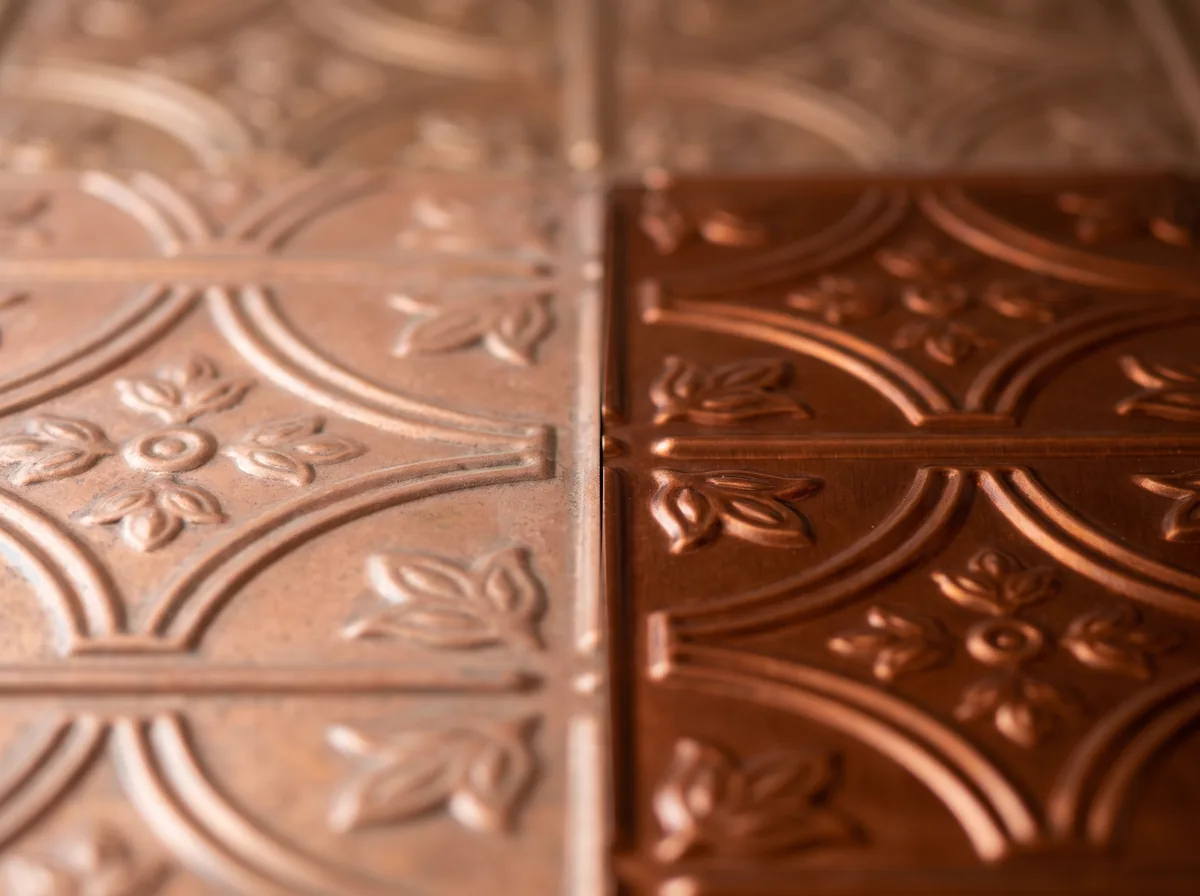
Picture a sunroom or a home office with a big south-facing window, finished a year or two ago with warm, faux copper ceiling tiles from Talissa’s faux tin tile line. The look was exactly what the room needed. Then one afternoon, moving a lamp or standing on a ladder to change a bulb, you notice it: the two or three tiles closest to the window read a shade lighter and slightly flatter than the ones further into the room. Knowing how to prevent fading on faux copper tiles before it spreads across the whole ceiling saves you from a mismatched patch job later.
That is not a manufacturing flaw and it is not damage. It is a pigmented decorative finish doing what pigmented finishes do everywhere in a home, from painted trim to upholstery, when one part of a surface gets years of direct sun and the rest does not. The good news is that once you understand why it happens, there is a fair amount you can do to prevent fading on faux copper tiles and even out the exposure instead.
What “faux copper” actually is
Nothing in the copper-finish tile collection is actual copper sheet metal. These are PVC, meaning vinyl, tiles pressed with an embossed tin-look pattern and finished in a warm copper tone, the same way a faux wood plank is a printed foam surface rather than solid timber. Saying that plainly matters here, because it also explains the fading question: a solid metal tile would tarnish or patina through an entirely different chemical process, but a PVC tile with a pigmented topcoat behaves like any other painted or coated plastic surface exposed to years of sunlight.
That distinction is also why care instructions differ from what you would use on real metal. A soft, dry or barely damp cloth is enough for routine dusting, and anything abrasive or solvent-based risks dulling the finish faster than sunlight alone ever would.
Why sunlight changes a pigmented finish
Pigments and dyes absorb light, and absorbing light is a form of absorbing energy. Over months and years, the ultraviolet portion of sunlight in particular carries enough energy to gradually break down the molecules that give a pigment its color, a process Smithsonian’s Museum Conservation Institute describes in its own guidance on protecting paintings, noting that fugitive dyes and colorants in paint will eventually discolor under exposure to ultraviolet light. A ceiling tile finish is not a museum painting, but the underlying chemistry of a pigmented surface reacting to years of UV exposure is the same idea.
Heat plays a supporting role too. A tile sitting directly in a sunbeam for part of the day runs warmer than one in shade, and warmth generally speeds up the same kind of gradual chemical change that light starts. Ordinary window glass blocks a meaningful part of the sun’s ultraviolet light, but it typically does not block all of it, which is part of why a spot that never feels hot to the touch can still be catching enough light and heat over time to slowly shift a finish, well before anyone would call it faded.
Which rooms are most at risk
A few situations bring together the two ingredients that matter, direct light and time:
- South- or west-facing rooms that get several hours of direct sun, especially in the afternoon when the light is strongest.
- Skylights or roof windows, where the sun hits the ceiling itself instead of the walls or floor.
- Sunrooms, three-season porches, and glass-heavy home offices, where there is often little on the glass to break up the light at all.
- Storefronts and other commercial spaces with large display windows, where the same section of ceiling can face a full day of sun for years without a break.
- Any spot close to a bright halogen or heat-lamp fixture, where the light source is inside the room, not the window.
Rooms where you probably do not need to worry
Hallways, closets, basements, and north-facing rooms with modest windows rarely see enough direct sun to matter over a normal ownership timeline. If a room stays comfortable without blinds and the sun never lands directly on the ceiling, fading is unlikely to be something you ever notice. That is also a useful way to explain, if a customer asks, why the same tile can look freshly installed in one room of a house and slightly softened in another a few years later: it usually comes down to the room, not the tile.

How to prevent fading on your faux copper tiles
None of this calls for redoing the ceiling. A handful of ordinary habits are enough to prevent fading on faux copper tiles from becoming obvious, without touching anything overhead:
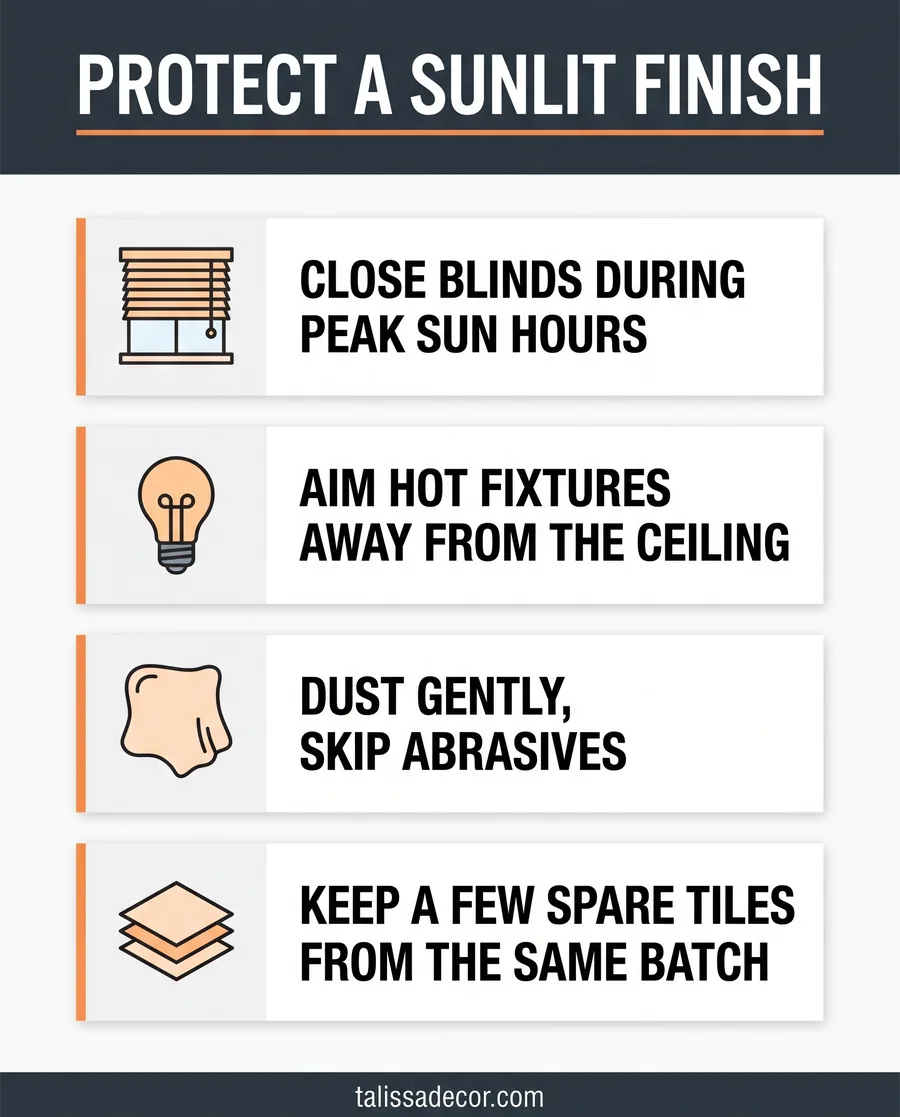
- Use blinds, sheer curtains, or a UV-filtering window film during the hours the sun hits the ceiling directly, rather than leaving the glass bare all day, every day.
- Keep track lighting and halogen fixtures aimed away from the tile surface where practical, since a light source close to the ceiling adds its own heat on top of whatever comes through the window.
- Dust with a soft dry or barely damp cloth instead of an abrasive pad or a strong household cleaner, since scrubbing a pigmented topcoat repeatedly can wear it faster than sunlight alone.
- If you are buying tiles for a sunlit room, order a few extra from the same production run and store them away from light. A future patch from the original batch blends in far better than a replacement tile ordered years later from a different run.
Did you know
Ordinary window glass blocks a meaningful part of the sun’s ultraviolet light but typically does not block all of it, so a wall or ceiling section that never feels warm to the touch can still be catching enough UV over the years to gradually change a pigmented finish nearby.
Pro tip
Rearranging furniture will not save a ceiling finish the way it can save a rug, but a window film or a set of blinds used during peak sun hours is one of the simplest ways to prevent fading on faux copper tiles without changing how the space looks the rest of the day.
Fitting this into your regular care routine
Fading prevention works best when it rides along with the cleaning habits you already have, not as a separate project. The PVC ceiling tile care answers cover the day-to-day basics, dusting frequency, what to avoid, and how to spot-clean a mark without touching the finish underneath. If a section ever does need replacing, whether from age, a leak, or a renovation, the glue-up PVC installation walkthrough covers removing and resetting a panel cleanly, including matching the surrounding tiles as closely as possible.
Good to know
How quickly any pigmented finish changes in sunlight depends on the room, the amount of direct light it gets, and the specific product, so nothing here is a promise about how a given tile will look after any particular number of years. If you are choosing tiles for a very sunlit space or have questions about a specific finish, reach out to the Talissa Decor team before you order.
Download the free quick guide
A one-page checklist covering which rooms are most exposed and the habits that help a pigmented tile finish hold its look longer.
Frequently asked questions
Will faux copper ceiling tiles eventually fade no matter what I do?
Some gradual change is normal for any pigmented finish that gets years of direct sun, the same way painted trim or fabric near a sunny window slowly changes over time. How noticeable it becomes depends heavily on the room, how much direct light it gets, and the specific finish. Reducing direct sun exposure with blinds or a window film and keeping hot light fixtures away from the ceiling are the main things within your control.
Is a color shift near a window a sign the tile is defective?
Not on its own. A gradual, even lightening in the part of the ceiling that gets the most direct sun is consistent with ordinary sunlight exposure, not a manufacturing problem. Sudden discoloration, staining, warping, or a change limited to one spot near a leak or a heat source is a different situation and worth a closer look, so if something looks off, reach out to the Talissa Decor team with a few photos.
Can I just repaint a faded faux copper tile myself?
That is a decision to make carefully, since paint will change how the embossed pattern reads and how the finish sits next to unpainted tiles. If a section is noticeably faded, ordering a replacement tile from the same collection, ideally from a saved batch bought at the same time, generally blends in better than painting over the existing finish.
Quick recap: a faux copper tile is a PVC panel with a pigmented finish, and pigmented finishes gradually change wherever they catch years of direct sun and heat, the same way painted trim or upholstery does. Rooms with strong south- or west-facing light, skylights, or storefront glass see it soonest. Blinds or a window film during peak sun, keeping hot fixtures pointed away from the ceiling, gentle dusting, and a few spare tiles from the same batch are the simplest ways to prevent fading on faux copper tiles and cover most of what you can actually control.
Not sure how a sunlit room will look a few years out, or want to order a sample tile first? ask the Talissa Decor team and we will help you plan around the light you actually have.