 Largest Ceiling
  CALL :
  About us
 FAQs
FAQs Gallery
 Contact


 Ceiling Planks
 2×2 PVC Ceiling Tiles
 Styrofoam Ceiling Tiles
 Wall Mural
 3D Wall Panels
 Crown Moldings
 Faux Wood Beams
 Other Products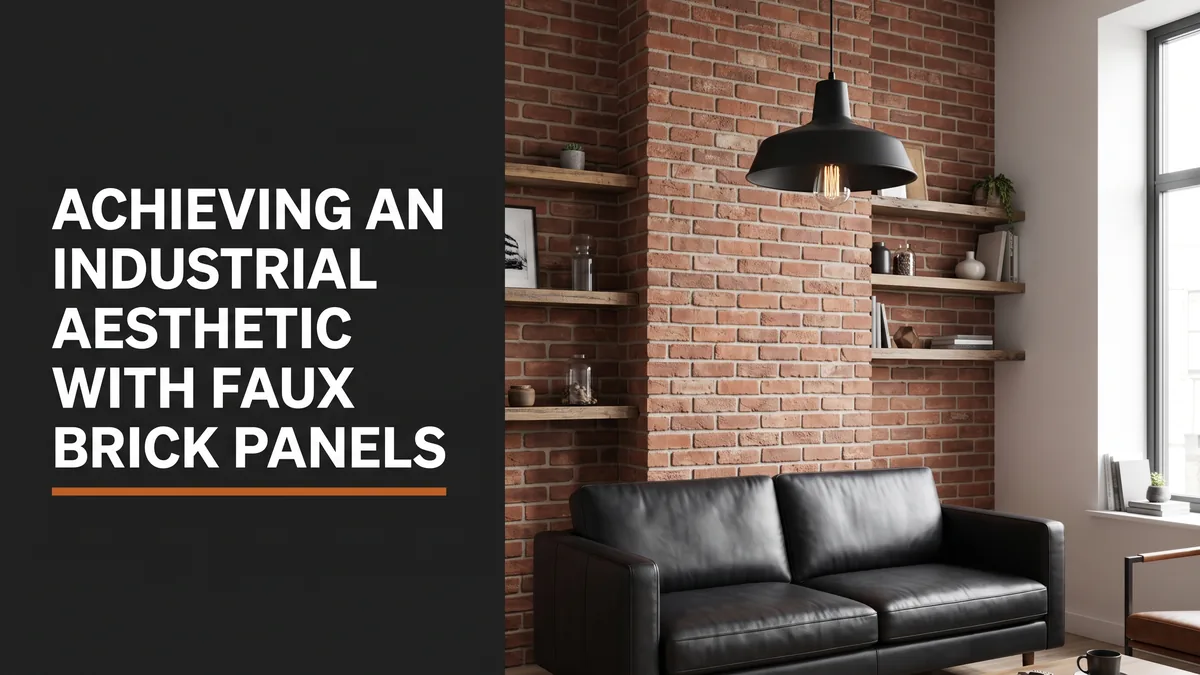
Achieving an industrial aesthetic with faux brick panels
Walk into a converted warehouse loft and the walls tell you where you are before the furniture does. Raw brick, a little wear, a warm rust tone under industrial pendants. That look is what most people are chasing when they search for faux brick panels industrial style, and the good news is you can build the whole mood without a mason, a permit, or a single crumbling wall. A run of textured brick-look wall panels gives you the exposed-brick character on any flat surface, in an afternoon, at a fraction of the weight and cost of the real thing.
This is a styling guide, not a sales pitch. Below is what defines the industrial aesthetic, why lightweight brick panels pull it off, which rooms take to the look best, and how to layer materials so the space reads “designed loft” instead of “theme restaurant.”
In this article
What actually defines the industrial look
Industrial design borrows from old factories and warehouses, so the style is built on honesty of materials. Nothing pretends to be fancier than it is. Surfaces stay a little raw, structure is shown off instead of hidden, and the palette stays grounded and warm. Brick sits at the center because it was the workhorse those buildings were made from.
The material palette
Think weathered brick, blackened or brushed metal, reclaimed or knotty wood, concrete, and glass framed in dark steel. The trick is contrast in texture: something rough (the brick), something hard and cool (metal), and something warm and organic (wood) in the same sightline. A brick feature wall gives you the rough, tactile anchor that the metal and wood then play against.
The color story
Industrial rooms lean into a narrow, moody range: charcoal, iron gray, aged white, and the terracotta-to-rust tones that brick brings for free. You are not fighting the brick color, you are decorating around it. Keep large surfaces muted and let the brick and a few metal fixtures carry the warmth. For the broader design history behind the style, the overview of industrial interior design is a useful primer on where these cues come from.
Quick take
The industrial look is really three things working together: raw texture, exposed structure, and a warm-neutral palette. A brick-look panel wall delivers all three at once, which is why it does so much heavy lifting in these rooms.
Why faux brick panels nail the aesthetic
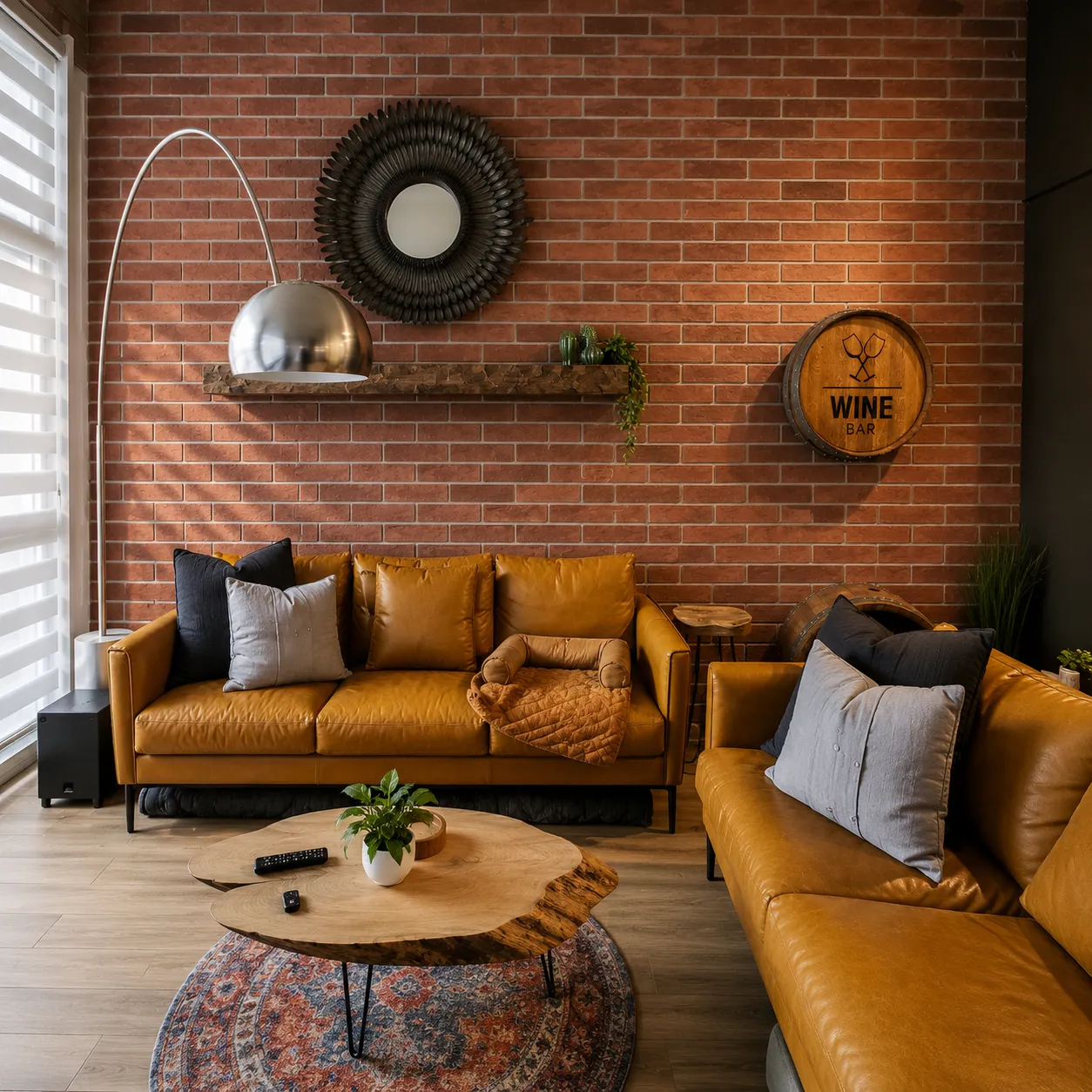
Real exposed brick is wonderful when a building already has it. Adding it where it never existed is heavy, messy, permanent, and expensive. Lightweight brick panels were made for exactly this gap. They reproduce the color variation, mortar lines, and texture of aged brick, but go up like paneling and come off cleanly if you change your mind.
| Consideration | Real exposed brick | Faux brick wall panels |
|---|---|---|
| Weight on the wall | Very heavy, may need structural review | Lightweight, mounts on most flat surfaces |
| Install | Masonry work, dust, days of labor | Cut, glue or fasten, often a single afternoon |
| Renter friendly | No, permanent | Yes, removable options exist |
| Color and texture control | Fixed to what is there | Choose the tone and finish you want |
| Upkeep | Sealing, dust in mortar joints | Wipe clean, no shedding grit |
Save your budget
The industrial look reads as expensive because the real materials are. Panels let you spend the drama on one bold feature wall and keep the rest of the room simple, which is exactly how designers stage these spaces on a normal budget.
Where the industrial brick look works best
Brick is versatile, but it lands hardest in rooms that already have a bit of openness, height, or utility to them. Here is where a brick-look accent wall tends to pay off.
Living rooms and open lofts
This is the classic. A single brick wall behind a sofa or a media unit gives an open-plan space a clear anchor and instant warmth. If your living area flows into a kitchen or dining zone, brick behind one of them helps define the boundary without a physical wall.
Home offices and studios
A brick backdrop has quietly become the favorite wall for video calls and content creators, and for good reason: it reads as characterful and grounded on camera without being distracting. It turns a spare bedroom desk setup into a space that looks intentional.
Kitchens, bars, and feature niches
Brick behind open shelving, a coffee bar, or a range hood leans into the warehouse-kitchen trend. Pair it with black hardware and open wood shelves and the whole zone feels styled. For more ways to build a statement wall without paint, our roundup of paint-free accent wall ideas covers panels, veneers, and more.
Did you know
Brick does not have to be red. Whitewashed, gray, and charcoal brick finishes are some of the most popular choices for modern industrial rooms because they keep the texture while calming the color down, which suits smaller or darker spaces.
Styling brick panels like a designer
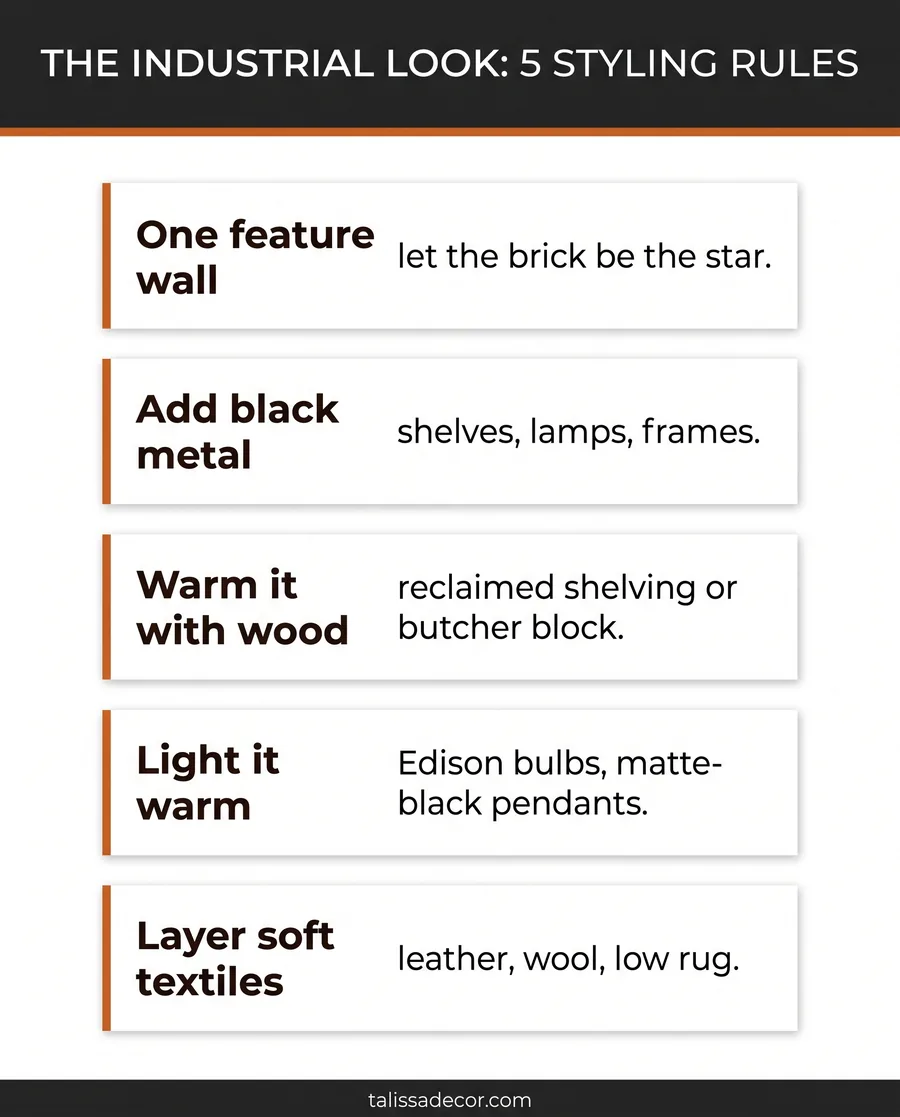
The difference between a loft that looks curated and one that looks like a costume is restraint and layering. A few rules keep the brick working for you:
- Let the brick be the star. One feature wall per room is plenty. Cover every wall and you lose the contrast that makes it read as industrial.
- Bring in metal deliberately. Black steel shelf brackets, an iron pendant, or a metal-frame mirror echoes the factory roots.
- Warm it with wood. Reclaimed-look shelving or a butcher-block surface keeps the room from feeling cold.
- Light it right. Edison-style bulbs, track lighting, or a matte-black pendant cast the warm, slightly moody light the style depends on.
- Layer soft goods. A leather chair, a chunky knit throw, and a low-pile rug add the comfort that stops raw materials from feeling harsh.
To expand the material story, mixing a brick wall with a wood or stone texture elsewhere in the room builds depth. Our guide to the best textured wall panels for living rooms shows how different finishes play together.
Pro tip
Photograph the wall at the time of day you use the room most, then choose your bulb color to match. Warm white (around 2700K) flatters brick tones and keeps the industrial mood; cool daylight bulbs can make the same wall look flat and gray.
Getting the install and finish right
The pointers below are general guidance for lightweight decorative panels. Always follow the manufacturer instructions for your specific product, confirm the panels suit your wall and room conditions, and use appropriate tools and safety gear when cutting. Talissa Decor is not responsible for outcomes from work done based on this article.
Most brick-look panels are forgiving to install, but a few habits separate a clean result from a patchy one:
- Start with a flat, clean, dry wall. Fill big dents and wipe off dust so panels sit flush and adhesive grabs.
- Plan your layout dry first. Lay panels against the wall, stagger the seams like real brickwork, and mark your starting line with a level.
- Cut with care. Score and snap or use a fine blade for outlets and corners so mortar lines still line up across cuts.
- Blend the seams. Offset joints and, if your product allows, touch up seams so no repeating pattern jumps out.
- Finish for the room. In a kitchen or bathroom, a suitable sealer adds wipeability; check that any sealer is compatible with your panel material first.
One thing to check first
Not every panel is rated for every spot. Heat near a range, moisture in a bathroom, and direct sun can all matter. Confirm the specific panel is suitable for the location before you commit, especially around cooktops and wet areas.
Download the free quick guide
A one-page checklist to plan, style, and install a brick-look feature wall the industrial way.
Frequently Asked Questions
Ready to bring some warehouse warmth into your space? Talissa Decor ships lightweight, easy-to-install decorative panels across the United States and Canada, so whether you are styling a loft in New York, a home office in Toronto, or a cafe corner anywhere in between, the industrial look is a few boxes away. Browse the brick-look 3D panel collection to find your tone, or reach out with your project details and we will help you plan the wall.