 Largest Ceiling
  CALL :
  About us
 FAQs
FAQs Gallery
 Contact


 Ceiling Planks
 2×2 PVC Ceiling Tiles
 Styrofoam Ceiling Tiles
 Wall Mural
 3D Wall Panels
 Crown Moldings
 Faux Wood Beams
 Other Products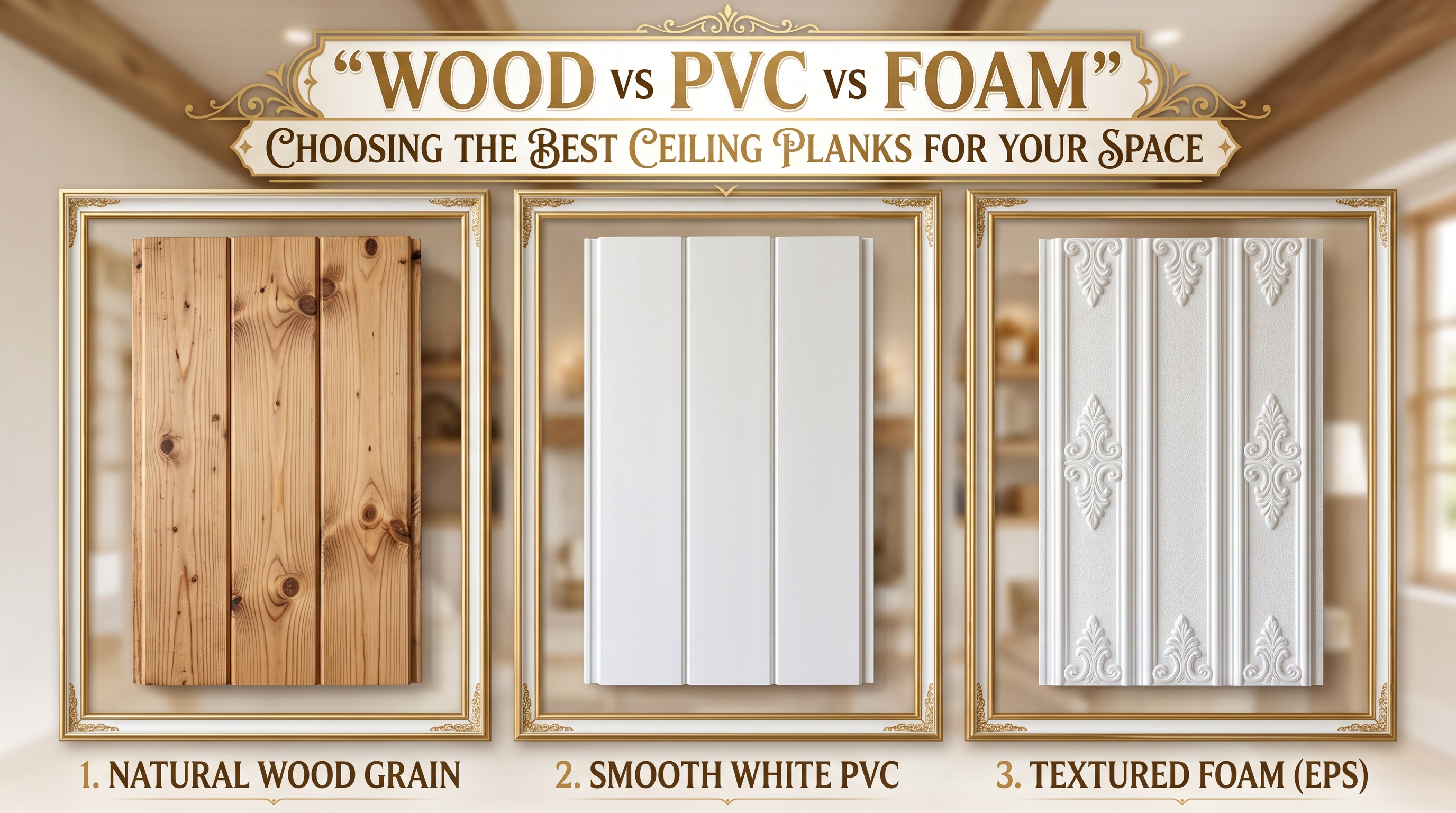
The ceiling plank material you choose determines how much it costs, how long it lasts, how difficult it is to install, and how it holds up to moisture. None of the three main options is universally best – they are each the right choice in different situations. Ceiling planks in a dry bedroom have different requirements than planks in a coastal vacation home bathroom, and different again from planks going into a commercial restaurant dining room.
This comparison covers wood, PVC, and foam planks across the dimensions that matter most for real installation decisions: cost, weight, moisture resistance, durability, installation method, and visual result.
Wood ceiling planks: authentic, demanding
Real wood ceiling planks deliver warmth and authenticity that no manufactured alternative fully replicates. The grain variation, natural texture, and the way wood takes stain and paint are genuinely different from embossed PVC. If your project is a high-end renovation in a dry interior space, and aesthetics are the priority, wood is the material ceiling planks were originally designed around.
The trade-offs are real. Wood is the heaviest option at 3-6 kg per square metre depending on species. It absorbs moisture and expands and contracts with humidity changes, so acclimatization before installation is mandatory (minimum 72 hours in the space), and gaps of 1/8 inch between planks are recommended to allow for seasonal movement. In any space with moisture – bathrooms, basements, lake houses, coastal homes – wood planks require vapor barriers and adequate ventilation to avoid warping, cracking, or mold development.
Cost: expect $3-$12 per square foot installed for pine or poplar planks, rising to $15-$30 for hardwood or reclaimed lumber. Professional installation adds $3-$6 per square foot for labor.
💡 Did You Know?
The most common species for DIY wood plank ceilings in North America are pine, cedar, and poplar. Cedar is naturally resistant to insects and has some moisture resistance due to its natural oils. Pine is the most widely available and least expensive. Poplar takes paint exceptionally well and is a good choice when you want a clean, contemporary finish rather than visible grain.
PVC ceiling planks: versatile, moisture-proof, underrated
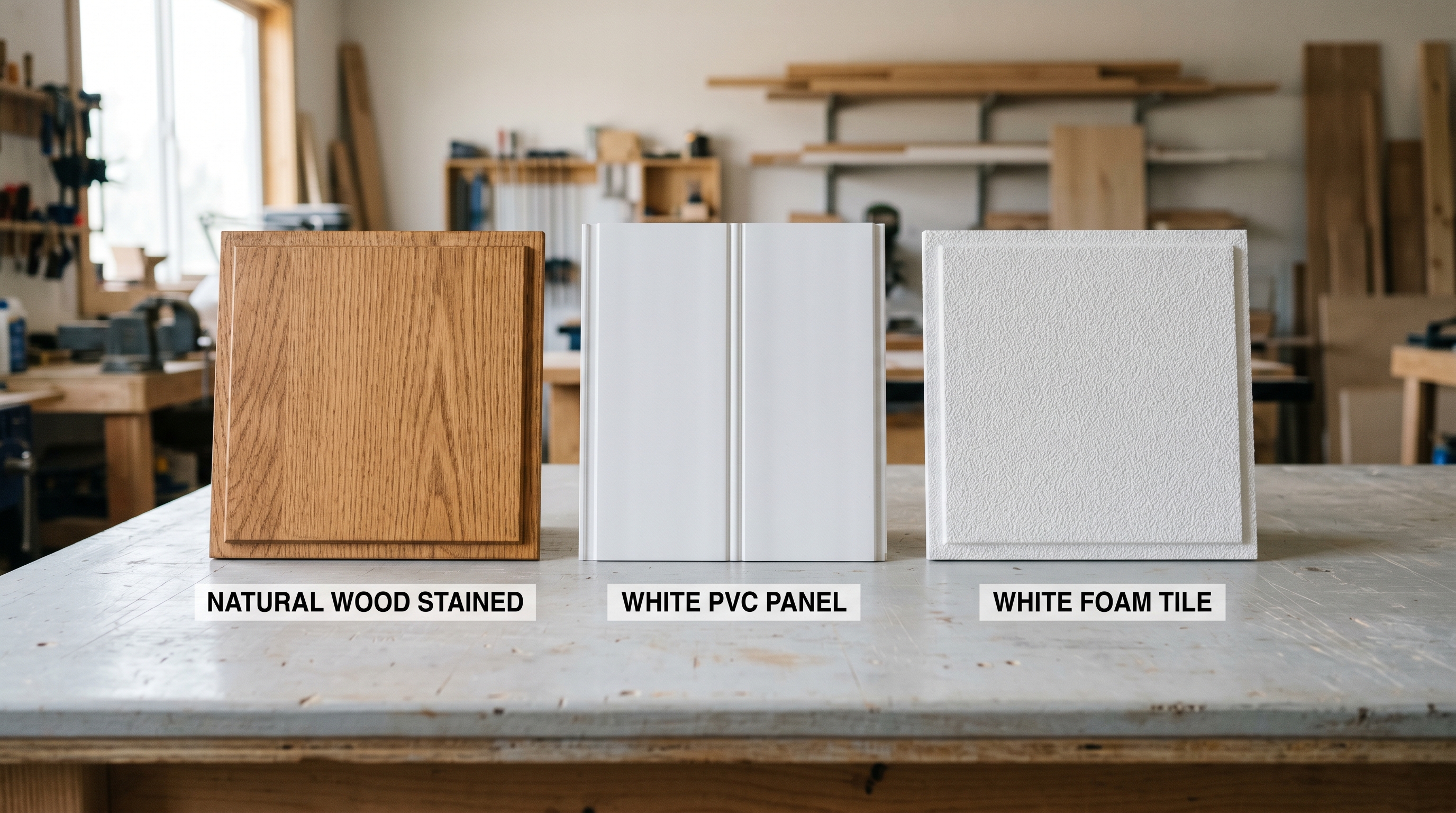
PVC tongue-and-groove ceiling planks are the most practical choice for most residential and commercial applications in 2026. They are fully waterproof, will not warp, crack, or grow mold regardless of humidity, and are available in wood-grain, beadboard, and solid-color finishes that have improved significantly in the last five years. The gap between PVC and real wood in terms of visual quality is much smaller than it was in 2018.
Weight: 0.8-1.5 kg per square metre, roughly 3-4 times lighter than wood. This matters for installation overhead and for applications with weight limits. Cost: $2-$6 per square foot including basic planks from Talissa Decor’s ceiling plank collection. Professional installation adds $2-$4 per square foot.
Installation is genuinely easier than wood. PVC does not need acclimatization. Cuts are clean with a standard utility knife or fine-tooth saw. Nailing is straightforward. The planks do not split or check at fastener points the way wood sometimes does. For a DIY installer, PVC adds confidence to the process.
Where PVC falls short: very high heat applications (above 60C) can cause slight deformation, though this rarely applies to ceiling installations. The surface hardness is slightly lower than wood, so impact damage leaves marks that wood would shrug off. And despite improving finish quality, a design professional looking closely will know it is not real wood.
Foam ceiling planks: lightest, lowest cost, limited durability
Expanded polystyrene (EPS) foam planks weigh just 0.3-0.5 kg per square metre, making them the lightest option by far and ideal for ceiling applications where structural load is a concern or weight savings are critical (RVs, older homes with questionable plaster substrate). They install with glue only, no fasteners required, and are the most DIY-accessible option in terms of cutting and handling.
The durability limitations are significant. Foam dents and cracks with contact that PVC or wood would absorb without damage. It is not paintable with solvent-based paints (which melt it), only water-based latex. It should not be used in high-traffic areas where the ceiling might be touched, bumped, or subject to movement. Best applications: dry living rooms and bedrooms where the primary goal is aesthetics and the ceiling will not be disturbed once installed.
Cost: $0.50-$2 per square foot, which makes foam planks the lowest-cost ceiling plank option by a significant margin. For rental properties or staging projects where appearance matters more than longevity, foam is worth considering.
Which material wins by room type
| Room type | Best material | Why |
|---|---|---|
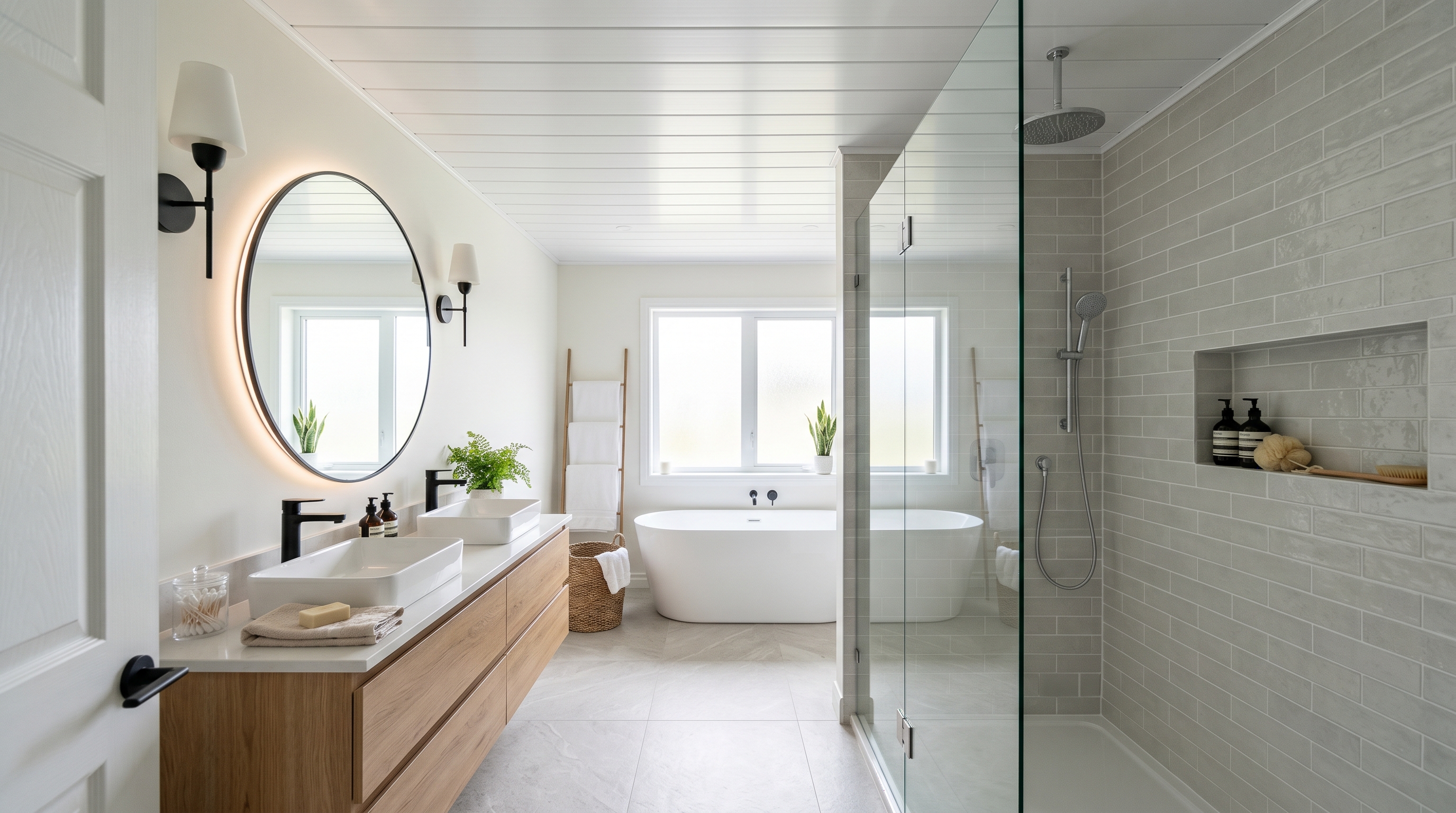
| Bathroom | PVC | 100% waterproof, no mold risk |
| Basement | PVC | Handles humidity variation, no warping |
| Living room / bedroom (dry) | Wood or PVC | Wood for authenticity, PVC for budget and ease |
| Kitchen | PVC | Resists grease, moisture, and steam |
| RV or camper | PVC or foam | Weight savings, PVC for durability |
| Staging or rental | Foam | Lowest cost, acceptable appearance |
| High-end home renovation | Wood | Authenticity and long-term finish quality |
Disclaimer: Recommendations in this article are general guidance only. Confirm product specifications, structural suitability, and installation requirements with a qualified professional before purchase or installation. Talissa Decor is not liable for outcomes based on this content.
Free Download: Quick Reference Guide
Wood vs PVC vs Foam Ceiling Planks Comparison Guide
Download PDF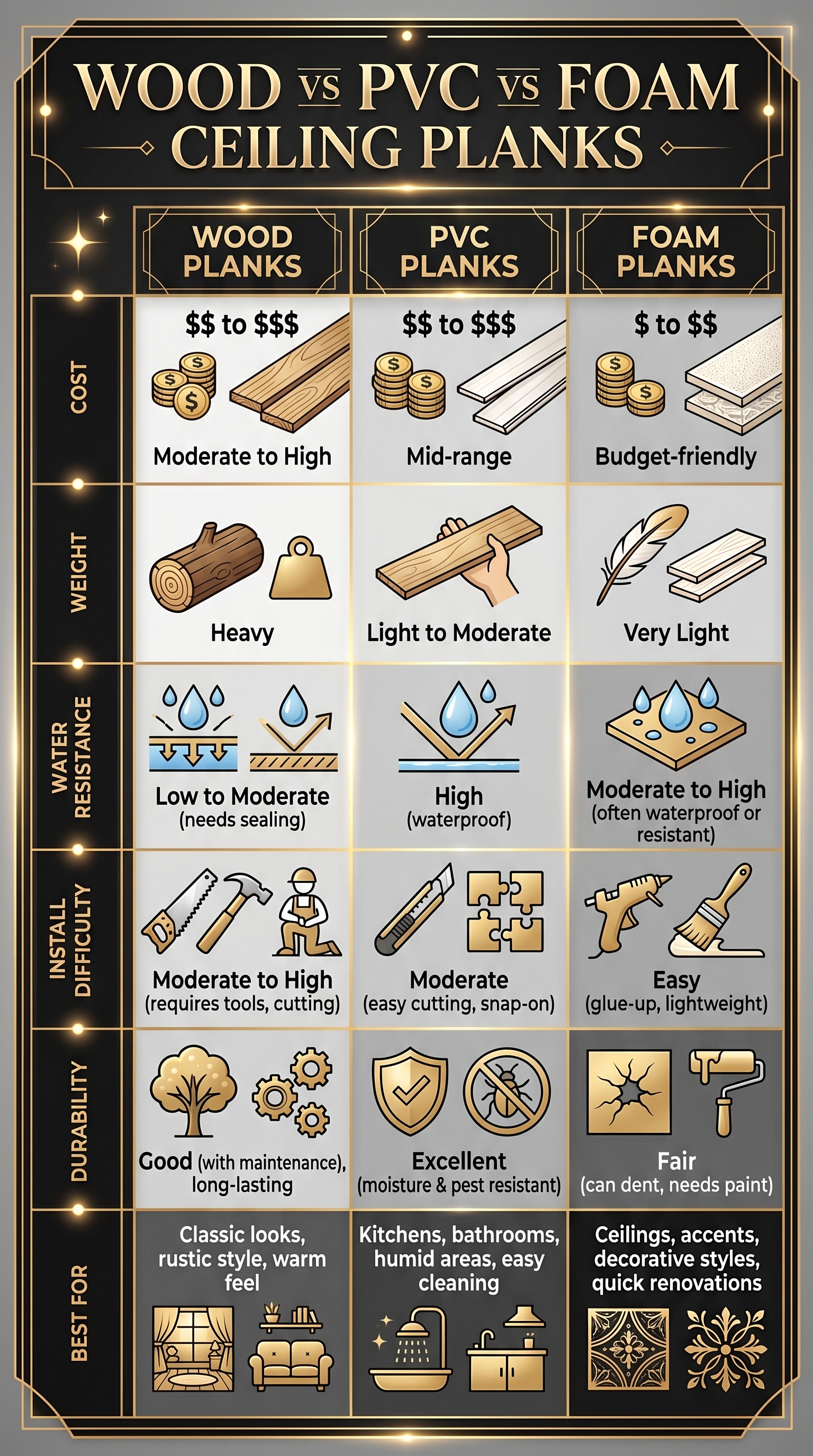
Keep reading
Talissa Decor stocks PVC, faux wood, and decorative ceiling planks with samples available before you commit to a full order. Browse the ceiling plank collection and filter by material, color, and style to find your match.

Written by
James O.
DIY home improvement writer with 9 years covering building materials and finishing products
James covers practical home improvement topics for weekend renovators and first-time homeowners. He focuses on material comparisons, installation guides, and cost-benefit analysis to help readers make confident purchasing decisions. He has hands-on experience with most major ceiling and wall panel product categories.