 Largest Ceiling
  CALL :
  About us
 FAQs
FAQs Gallery
 Contact


 Ceiling Planks
 2×2 PVC Ceiling Tiles
 Styrofoam Ceiling Tiles
 Wall Mural
 3D Wall Panels
 Crown Moldings
 Faux Wood Beams
 Other Products
Do Styrofoam Ceiling Tiles Insulate a Room? Answering Top FAQs
Do styrofoam ceiling tiles insulate a room the way people hope? It is one of the questions we hear most from shoppers browsing our styrofoam ceiling tile collection, usually while picturing a warmer living room or a quieter home office along with a fresh ceiling. The honest answer is more useful than a plain yes or no, so this post works through the questions people actually ask us, in plain language, instead of a single sales-pitch paragraph.
The short version, before the details: styrofoam tiles insulate a room a little, never as much as a wall or attic built with real insulation, and the difference matters for anyone hoping a ceiling upgrade will also lower a heating bill. If the question you have is not covered by one of the headings below, the short list at the very end is a good place to look next.
Good to know
This article explains general principles of how insulation works. It is not a performance rating for any Talissa Decor product. Styrofoam ceiling tiles are sold as a decorative ceiling covering, not as a certified insulation material, and no specific thermal number is claimed for them here. For an actual assessment of your home, talk to a qualified insulation contractor or energy advisor.
Do styrofoam ceiling tiles actually insulate a room?
A little, but not in the way a wall full of batts or an attic full of blown-in insulation does. A styrofoam ceiling tile is a thin decorative panel, so it does not carry the same job description as a dedicated insulation product installed inside a wall or roof cavity. For heat to actually stay where you want it, a material generally has to resist heat flow, fill the space it sits in completely and evenly, and hold up over time, which is roughly how Natural Resources Canada's home insulation guidance describes what makes insulation effective. A tile glued to the surface of an existing ceiling is doing a much smaller, more limited version of that job than a cavity packed with a purpose-built material. Put plainly, styrofoam tiles insulate a room roughly the way a light sweater helps on a cool day, a small comfort layer, not a substitute for a properly insulated wall or attic.
People often ask
Does painting over a styrofoam tile change any of this? Paint changes the look and can help some finishes handle light or humidity a little better, but it does not add any meaningful insulating value on its own.
What does R-value measure, and do tiles carry one?
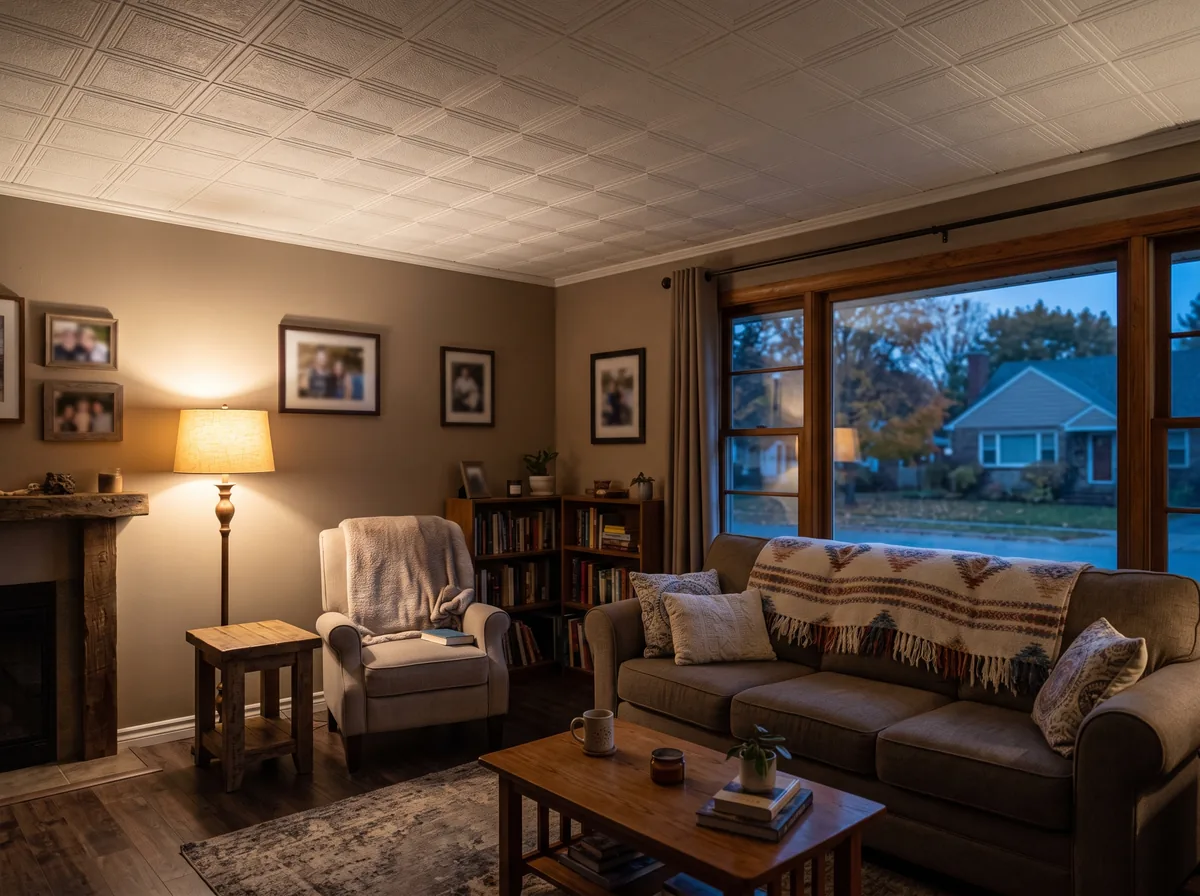
R-value is the standard measurement people reach for when comparing insulation materials. Under ENERGY STAR's home insulation guidance, R-value is described as a measure of a material's ability to resist heat traveling through it, and that concept applies to dedicated insulation products, fibreglass batts, blown-in cellulose, spray foam, that are manufactured and installed for that specific job. Talissa's styrofoam tiles are not sold, tested, or labeled with an R-value in that sense, so lining a decorative tile up against a rated insulation product is comparing two different kinds of things. If you want an actual number for your own home, an insulation contractor or energy advisor can look at what is already behind your walls, attic, and ceiling and tell you what upgrading it would involve.
Will foam tiles make a cold room warmer?
A styrofoam tile alone will not turn a genuinely cold room into a warm one, and it is not designed to try. What it can do is finish a ceiling that already has proper insulation and air sealing behind it, so any comfort improvement people notice after an installation usually comes from pairing a tile upgrade with fixing draftier windows and doors or an under-insulated attic, not from the tile carrying that load by itself. Treat the tile as the finish, not the fix, and the expectations tend to line up with what actually happens after installation day.
Did you know
A completely still layer of air is, on its own, a fairly capable insulator, which is part of why gaps, gaps around fixtures, and compressed material in a wall cavity hurt performance even when insulation is technically already there. Air sealing and insulation tend to be discussed together for exactly that reason.
Do they help with sound as well as temperature?
Foam is naturally a bit more forgiving with sound than a hard, dense ceiling surface, so plenty of owners notice a slight softening of echo after installing styrofoam tiles, especially in a room with hard flooring and bare walls. That is a modest side effect of the material, not real noise control, and anyone chasing serious sound reduction in a home theater or against a shared wall needs a dedicated acoustic product rather than a decorative ceiling tile.
How do styrofoam tiles compare with PVC tiles here?
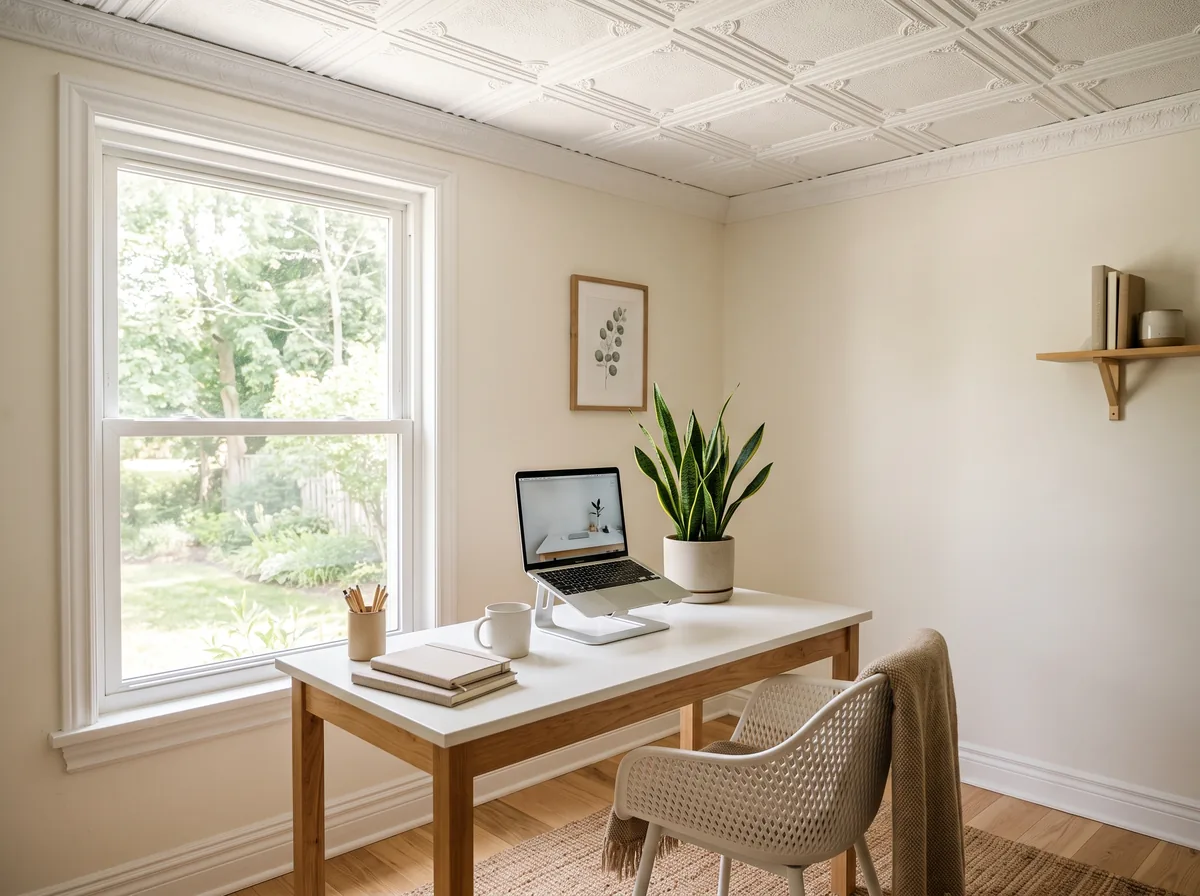
Styrofoam and PVC tiles are similar in this respect: both are lightweight decorative panels rather than rated insulation materials, so the meaningful differences between them sit elsewhere, moisture tolerance, price bracket, and finish options. We cover those differences directly in our styrofoam versus PVC comparison guide, but for the specific question of warming a room, neither material substitutes for wall or attic insulation installed by a contractor.
Where does real insulation live in a house?
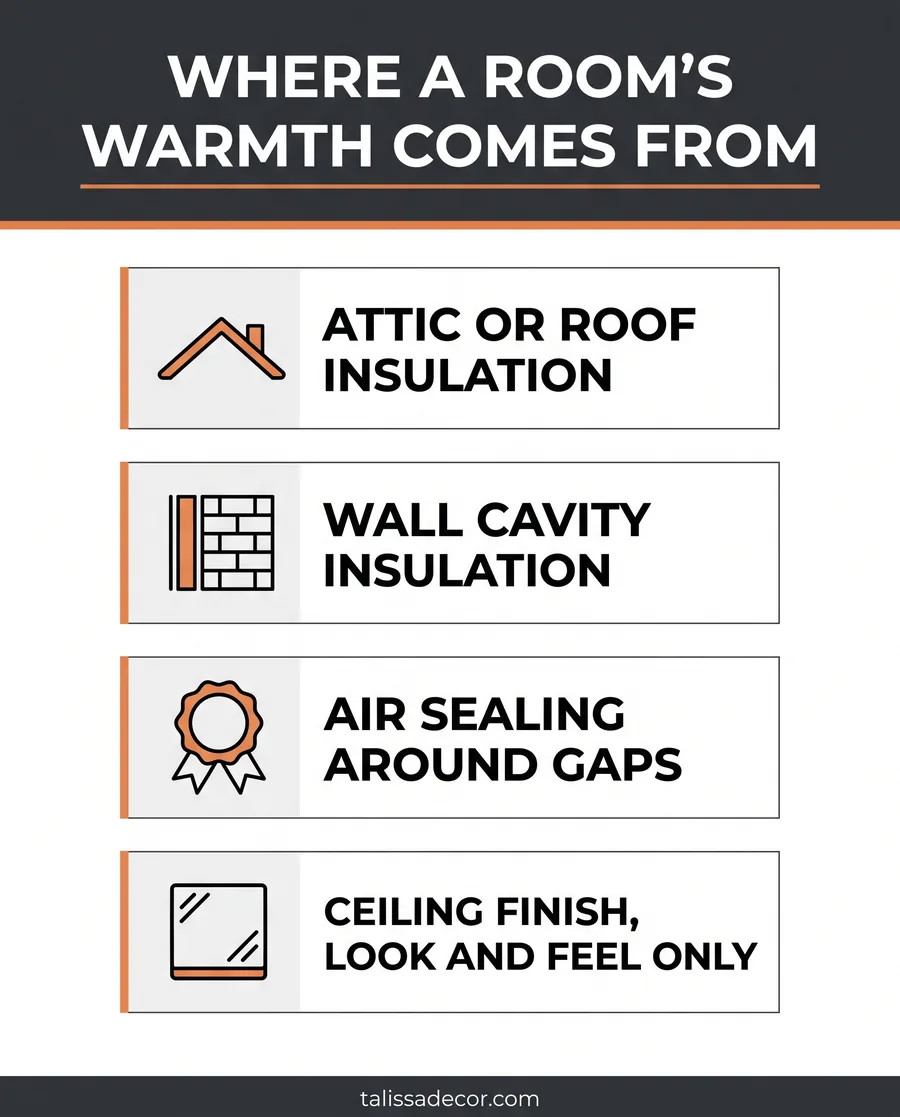
In most homes, the insulation doing the real work sits out of sight: in the attic or roof space, inside exterior wall cavities, and around the basement or crawlspace rim joist. A finished ceiling surface, whether that is drywall, a suspended grid, or a decorative tile, sits on the room side of that assembly and is generally not where the thermal performance comes from. Knowing that split helps set realistic expectations before any ceiling project starts, since a tile swap and an attic top-up are two different line items on two different budgets, even though both can happen in the same renovation.
This also explains why a basement or a garage sometimes feels colder even after a ceiling refresh. If the walls behind the finish were never insulated to begin with, changing what covers the ceiling will not touch that underlying gap. An installer or energy advisor walking the space in person is in a far better position to say where the cold is actually coming from than a general guide like this one can be.
Is a ceiling tile upgrade worth it for comfort?
Yes, just not for the reason of trapping heat. A styrofoam tile ceiling changes the look and feel of a room, can cover an old popcorn ceiling or water stains, and adds a level of finish that plain drywall does not. Comfort-wise, expect a fresher, tidier looking room rather than a lower heating bill. Ordering a few sample tiles before you commit is a low-pressure way to see the finish and thickness in person before deciding whether the look is worth the project. If lower energy use is the actual goal, that conversation belongs with whoever assesses your attic, walls, and windows, not with a ceiling tile choice.
Download the free quick guide
A one-page checklist for separating a decorative ceiling upgrade from an actual insulation project.
Still wondering?
Can I install these myself to see the difference?
Most styrofoam tiles are a glue-up product meant for a DIY install, and our styrofoam tile installation guide walks through surface prep and layout. Installing them will not answer the insulation question either way, since the tile itself is not the variable that changes a room's heat loss.
Who should I talk to about a bigger insulation upgrade?
A local insulation contractor or an independent energy advisor is the right call for anything beyond the ceiling finish, attic top-ups, wall insulation, and air sealing are their territory, not a decorative products retailer's. If your question is really about tiles, patterns, sizing, or installation, reach out to our team and we are glad to help with that part.
We get some version of this question almost every week, and the honest version of the answer is always the same shape: styrofoam tiles insulate a room only at the margins, and the real reason to install them is how a room looks, not a substitute for the insulation living behind your walls and above your ceiling. Once that expectation is set correctly, most people end up happy with a tile ceiling for exactly what it is good at.