 Largest Ceiling
 CALL :
 About us
 FAQs
 Gallery
 Contact



 Ceiling Planks
 2×2 PVC Ceiling Tiles
 Styrofoam Ceiling Tiles
 Wall Mural
 3D Wall Panels
 Crown Moldings
 Faux Wood Beams
 Other Products

Nursery Indoor Air Quality: Choosing Low-VOC Ceiling Boards and Safe Adhesives
If a nursery ceiling is on your to-do list, the ceiling boards and the glue you pick deserve the same attention as the crib. New materials can release gases for a while after installation, and a baby’s room is the last place most parents want to guess. The good news is that a few simple questions and a little planning go a long way. Below is how to read a “low-VOC” claim, what to ask any supplier, and how to finish the work well before the baby arrives. If you are weighing a quick refresh, our guide to lightweight ceiling panels shows what the foam option looks like.
Good to know before you start
Please note: This article is general information, not medical or professional advice. Product details, documentation and guidance change over time. Check the details that apply to your home with the manufacturer and, for health questions, a qualified professional such as your family doctor or pediatrician. Talissa Decor is not responsible for decisions made solely on the basis of this article.
What a low-VOC claim does and does not tell you
VOC stands for volatile organic compound. According to Health Canada’s page on volatile organic compounds, VOCs are a large group of chemicals found in indoor and outdoor air, and some have a smell while others do not. Health Canada says levels found in Canadian homes do not usually pose a significant health risk for most VOCs, but it also lists children, seniors, pregnant people and people with existing health conditions among those at greatest risk. That is why many parents look closely at nursery materials.
The same page names building materials such as paint, glues and varnish, and composite wood products, as indoor sources. As of October 2026, its advice includes increasing ventilation when you use glues, paints and adhesives, and choosing low-emission products when possible.
A label that says “low-VOC” is a claim about one product, measured in a specific way. It is not a guarantee that a room will be free of odour or emissions. A nursery plan works best when you treat the claim as the start of a conversation and ask to see the paperwork behind it.
This short Indoor Air Quality Association video explains what volatile organic compounds are, which helps when you read product labels.
How common ceiling boards compare for a nursery
Each type of ceiling board brings its own set of questions. None of them is automatically the right or wrong choice, so compare what you can find out about each one.
Drywall with paint
A painted drywall ceiling is simple and familiar. The questions go to the primer and paint, since those are the products that dry in the room. Many paint brands list their emission category on the can or on a data sheet, which makes comparison easy.
Wood and composite boards
Real timber has its own natural odour. Composite wood products can emit VOCs, according to Health Canada, so ask what binder the board uses and request the manufacturer’s documentation if you are considering one. Finishes and sealers add another layer to check.
Lightweight foam planks
Talissa Decor planks are lightweight polystyrene boards that come pre-finished in wood-look tones, so there is no staining or sealing step in your room. That removes one source of fumes, but it does not make any board emission-free. Ask the Talissa Decor team what documentation is available for the specific product you are considering, and use the sample kit to see how it feels in the room first.
The adhesive: the part you smell first
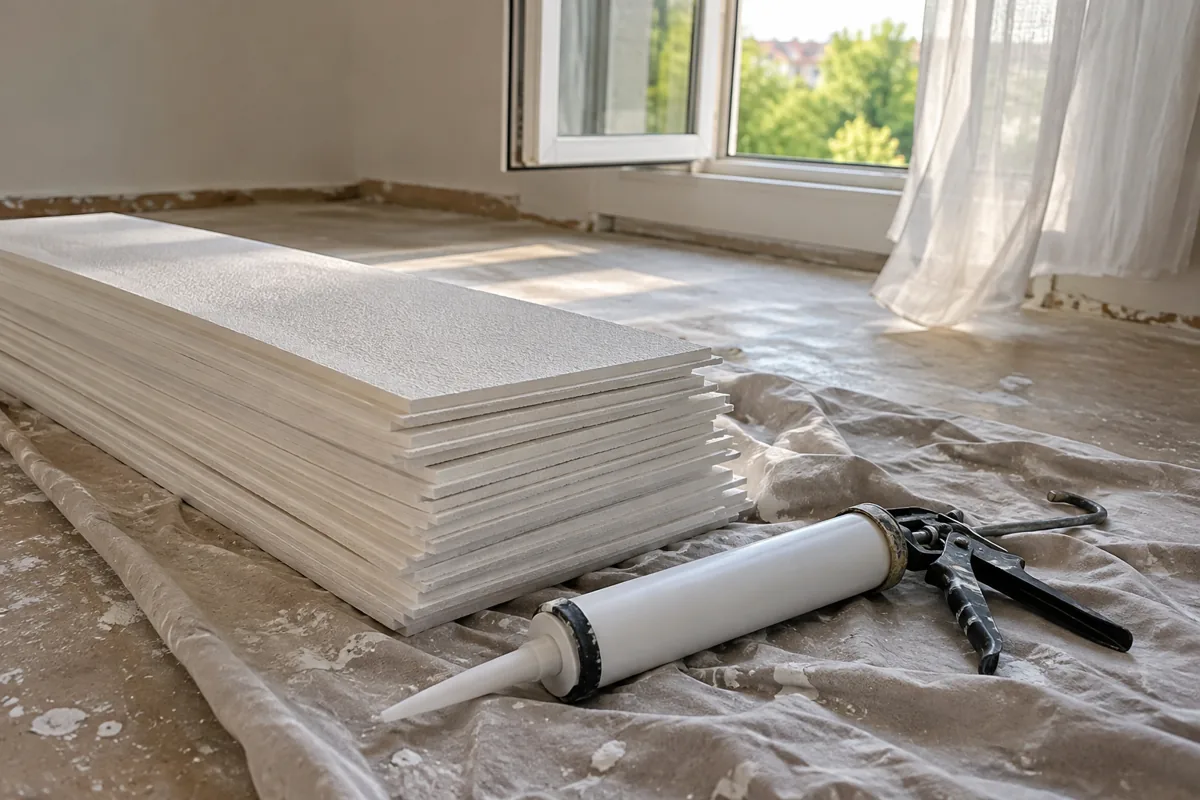
For most ceiling projects, the adhesive is the product that is wet and active while you work, so it deserves a close look. Talissa Decor describes its Styro Pro foam adhesive as a water-based, premixed acrylic paste with no smell. That is useful information, but it is a description of the product, not a certificate for your nursery. For any adhesive you plan to use, ask for the safety data sheet and read the label. Look for the recommended ventilation, the working temperature and the cure time.
The U.S. Environmental Protection Agency’s page on volatile organic compounds and indoor air quality notes that products such as glues and adhesives can release VOCs while they are used and, to some degree, when stored. Keeping tubes sealed and out of the nursery until you need them is an easy habit.
Water-based adhesives are common for foam products because solvent-heavy adhesives can damage polystyrene. If you are ever tempted to use a different glue because it is already in the garage, stop. A glue that eats foam is a problem for the ceiling and for the air.
Questions to ask any supplier
Put these in writing and keep the answers. A supplier that takes the question seriously will usually answer plainly.
- What is the board made of, and what is the surface finish?
- Is there a safety data sheet or technical data sheet for the board and for the adhesive?
- What emission or certification documentation exists, and which product does it cover?
- What ventilation and cure time does the adhesive label recommend?
- Is the product meant for indoor use only, and are there any limits on temperature or sunlight?
Talissa Decor planks, for example, are for indoor use and closed patios, and direct sunlight can damage them. That kind of detail is the sort of thing a data sheet or product page should state plainly.
Plan the timeline so the ceiling is done early
The safest scheduling idea is to finish the ceiling before the nursery is furnished. Install the boards with the room empty, ventilate it, and give the adhesive the full cure time on the label before moving anything in. A project that wraps up weeks before a due date leaves room for slippage, and baby arrivals have a habit of not following a schedule.
- Weeks before the due date: pick the boards, request documents, and order a sample.
- Several weeks out: install the ceiling with the room empty and the windows open when the weather allows.
- After installation: keep the room ventilated, then do a smell check before bringing in furniture.
- Right before the baby arrives: air the room out again and wipe down surfaces.
Cold months complicate this. Opening windows in January is a trade-off, so short, strong bursts of fresh air, with the nursery door closed to protect the rest of the house, work better than leaving a window cracked all day.
A simple ventilation plan
Ventilation is the first step in Health Canada’s advice, and it costs nothing. Open windows on two sides of the room if you can, so air actually moves through. Run a bathroom or kitchen exhaust fan that vents outside while you work. If you have a heat recovery ventilator or a properly maintained HVAC system, use it. Keep children and pets out of the room while the work is under way and while the adhesive cures.
If you want a short refresher on what VOCs are, the Indoor Air Quality Association video earlier in this article covers the basics.
When to ask a professional
If someone in your household has asthma, allergies or sensitivity to smells, talk to your family doctor or pediatrician before the work begins. If you notice a strong odour that does not fade, headaches, or irritation after the work, increase ventilation and speak to a health professional. For questions about the materials themselves, the manufacturer is the right place to start, and you can contact the Talissa Decor team with your product and room details.
Quick questions
Do I need a product that is labelled low-VOC?
A label can help, but it is not the whole picture. A low-VOC claim applies to a specific product and a specific test, and different manufacturers use different wording. Ask for the safety data sheet and any emission documentation, read the label for ventilation and cure time, and compare more than one product. The supporting paperwork tells you far more than a claim on the front of a box.
Can I install a new ceiling while the nursery is already furnished?
It is better to finish first. Working in an empty room makes it easier to ventilate, keeps fabric and bedding away from adhesive fumes and dust, and removes any chance of bumping furniture. If the nursery is already set up, move the furniture and soft items out for the work and the cure time, and air the room out thoroughly before moving everything back in.
How long should the room air out afterward?
No single number fits every product and every home. Follow the cure time on the adhesive label, add extra time in cold or humid weather, and use a simple smell check as a guide. If a noticeable odour remains, keep ventilating and give it more time. When in doubt, ask the manufacturer for guidance on your specific product.