 Largest Ceiling
  CALL :
  About us
 FAQs
FAQs Gallery
 Contact


 Ceiling Planks
 2×2 PVC Ceiling Tiles
 Styrofoam Ceiling Tiles
 Wall Mural
 3D Wall Panels
 Crown Moldings
 Faux Wood Beams
 Other Products
A 2026 Guide to Lightweight Ceiling Panels for Your Home or RV
Weight is the first thing to think about when choosing ceiling panels. A heavy tile glued overhead in an old plaster ceiling can fail if the substrate is not solid. In an RV or camper, adding unnecessary weight affects fuel economy and structural load limits. The good news is that 2026 panel technology gives you more decorative options in lighter materials than ever before, and the installation systems have improved significantly.
This guide covers the four main lightweight panel categories, their typical weights, where each one makes sense, and what to look for before buying. Whether you are renovating a Brooklyn townhouse or upgrading the interior of a Class A motorhome, the material choice upfront saves a lot of rework later.
Four lightweight ceiling panel options in 2026
1. PVC ceiling panels (the lightest structural option)
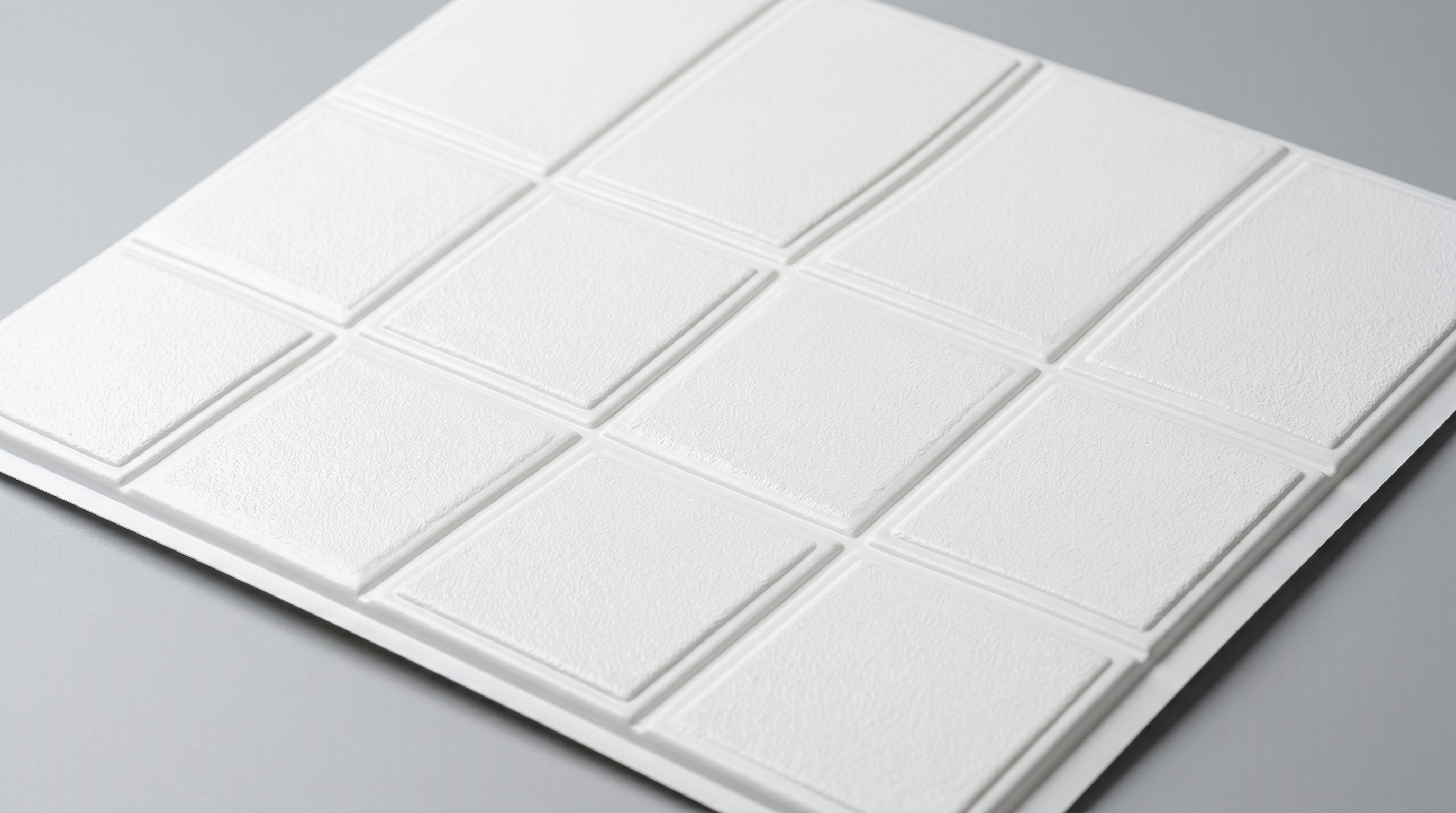
PVC panels weigh between 0.8 and 1.2 kg per square metre, making them the lightest structural ceiling panel option available. They are 100 percent waterproof, will not warp in humid environments, and are available in dozens of embossed patterns including faux tin, coffered, and plank profiles. For RV installations and basement renovations where moisture is a concern, PVC is the preferred choice.
Talissa Decor’s PVC ceiling tile collection includes styles that replicate traditional tin ceilings at a fraction of the weight. Most PVC tiles are cut with standard woodworking tools, which makes them genuinely DIY-friendly for homeowners without specialized equipment.
2. Foam ceiling tiles (lightest overall, lowest cost)
Expanded polystyrene (EPS) foam tiles typically weigh 0.3-0.5 kg per square metre – light enough to glue overhead with minimal adhesive and minimal surface preparation. They are not structural; they do not add rigidity to the ceiling and require a flat, smooth substrate. The trade-off for the low weight and cost is durability: foam tiles dent with moderate contact and do not handle high humidity without special coatings.
Best use cases: dry interior rooms where the main goal is aesthetics over durability, and RV interiors where weight savings are a priority. Not recommended for kitchens, bathrooms, or spaces with children or significant traffic beneath the ceiling.
💡 Did You Know?
Class A motorhomes have a GVWR (Gross Vehicle Weight Rating) that limits total loaded weight. A full interior ceiling replacement of a 30-foot RV ceiling – roughly 18 square metres – adds about 9-22 kg depending on material. PVC panels add 14-22 kg. Foam panels add just 5-9 kg. For owners already close to their GVWR, this difference matters.
3. Decorative tin ceiling tiles (authentic, heavier)
Genuine tin ceiling tiles – stamped steel with a tin plating – weigh 2.5-4 kg per square metre, which is heavier than PVC but significantly lighter than plaster or drywall. They are the most durable option for high-traffic commercial spaces and the most authentic for period renovation work in older homes. Installation requires secure fastening into joists or furring strips rather than adhesive-only application.
For most residential home renovations where authentic period aesthetics are the goal, tin tiles are the right call. For RVs or applications where minimizing weight is critical, PVC faux tin panels replicate the look at one-third the weight.
4. Beadboard and plank-style panels (versatile, mid-weight)
Beadboard PVC panels and plank-style profiles weigh 1.0-1.8 kg per square metre. They install as tongue-and-groove panels across the ceiling, creating a linear or plank ceiling look popular in farmhouse and coastal styles. Ceiling plank panels from Talissa Decor are available in both white and woodgrain finishes, and the tongue-and-groove locking system makes them easier to install level than individual tiles.
🛠️ Pro Tip
In an RV, always run ceiling panels parallel to the length of the vehicle, not perpendicular. This orientation better accommodates the slight flexing of the RV frame over road travel without popping panel joints. Use a flexible construction adhesive rated for foam and PVC rather than standard drywall compound.
Choosing ceiling panels for an RV: what home guides miss
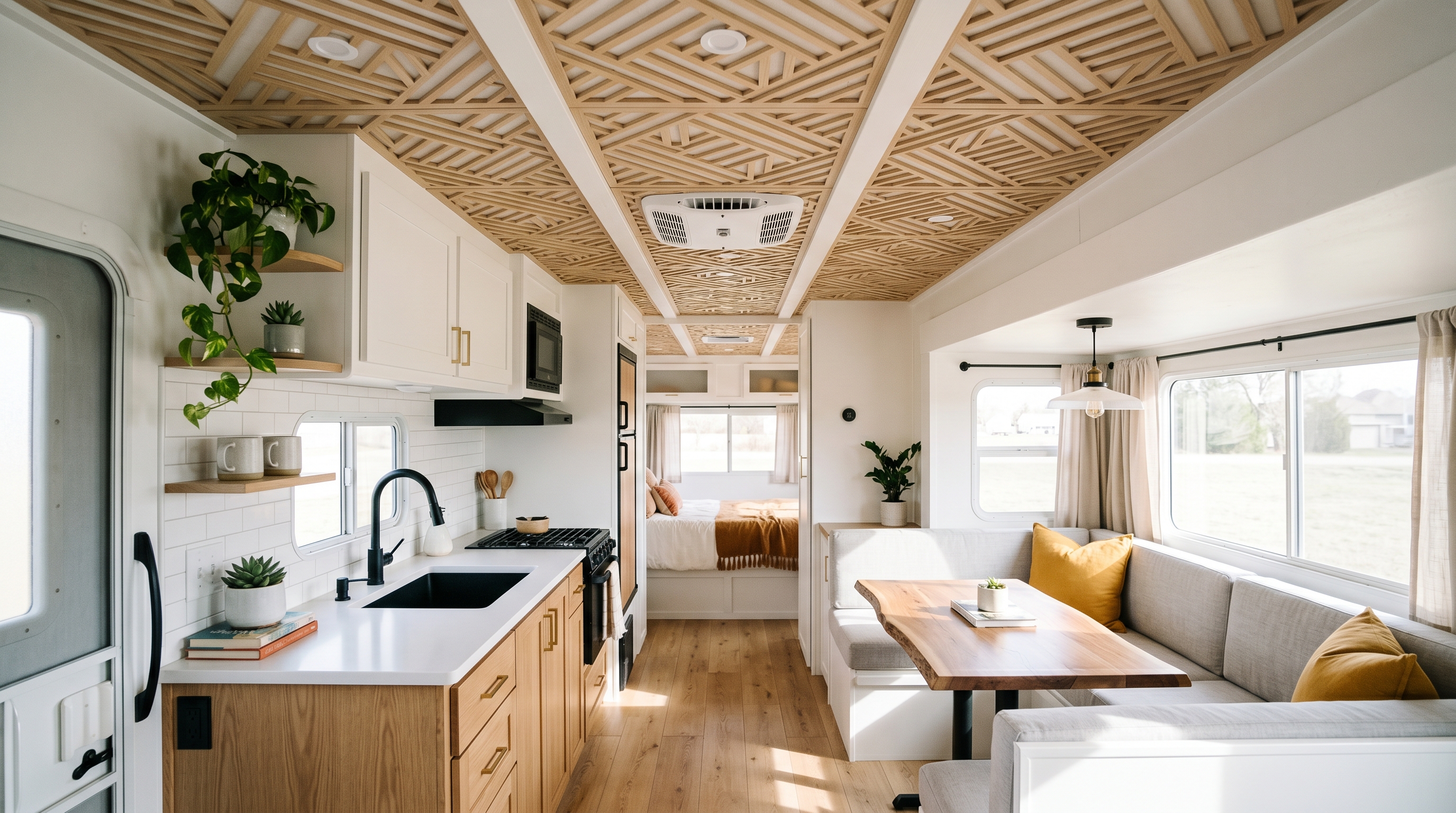
RV ceiling installations have requirements that do not apply to home renovations. The ceiling substrate in most RVs is thin luan plywood or fiberglass board, not drywall. Standard drywall adhesives and screw-based fasteners are inappropriate. Use a flexible construction adhesive compatible with PVC and foam, and allow for thermal expansion – interior RV temperatures can swing from -10C in winter storage to 50C+ in direct summer sun. Expansion gaps at edges prevent buckling.
Electrical junction boxes and lighting fixtures also need to be planned before installing panels. In an RV, rerouting wiring after panels are glued down is significantly more difficult than in a home with accessible attic space above. Map out all fixture locations and run any new wiring before the first panel goes up.
Weight and cost comparison by material
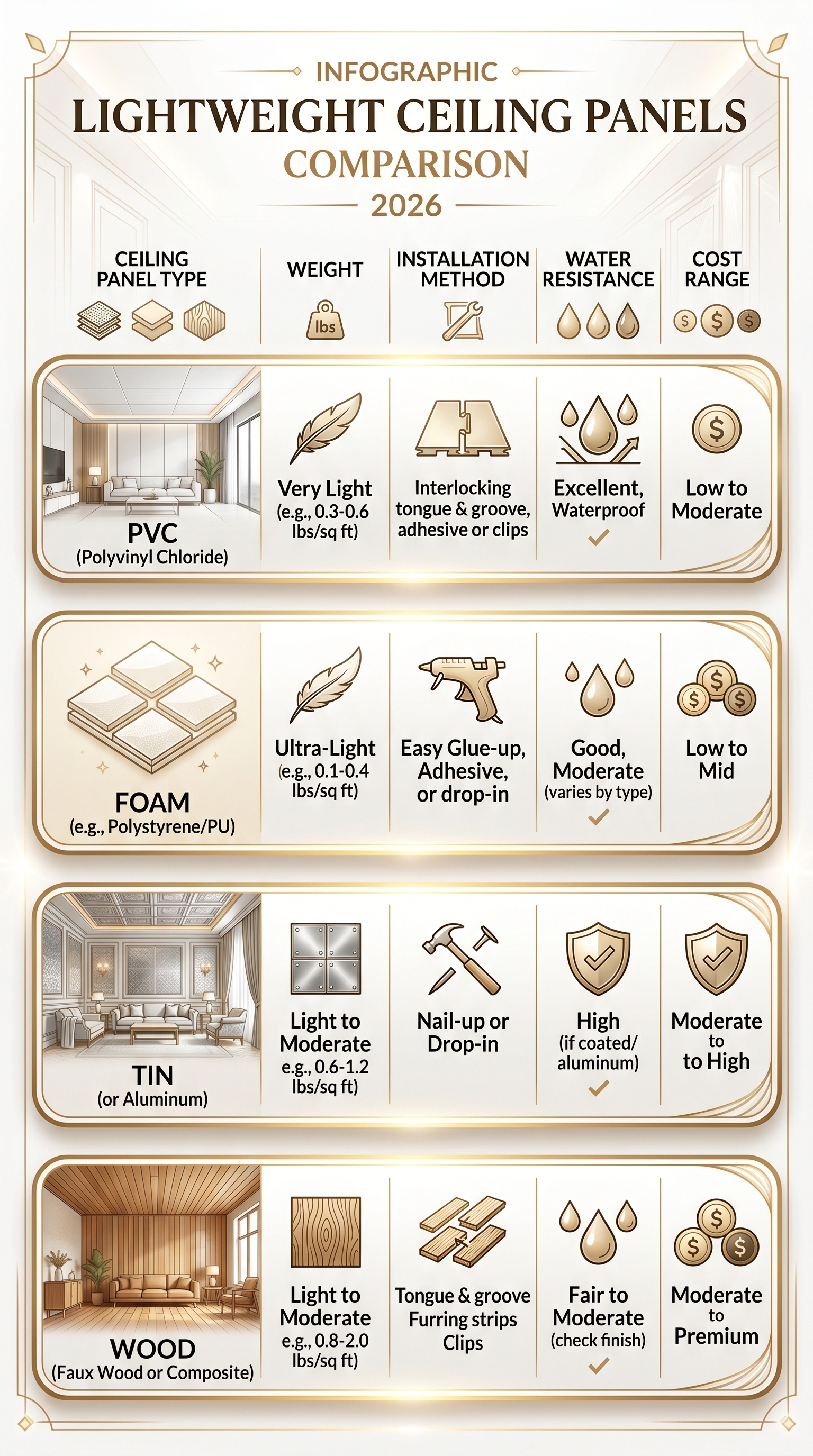
| Material | Weight per m2 | Cost per tile | Water resistant | RV suitable |
|---|---|---|---|---|
| Foam (EPS) | 0.3-0.5 kg | $0.50-$2 | No | Yes (dry areas) |
| PVC | 0.8-1.2 kg | $2-$6 | Yes | Yes |
| Plank / beadboard PVC | 1.0-1.8 kg | $3-$8 | Yes | Yes |
| Tin (stamped steel) | 2.5-4.0 kg | $5-$20 | With paint | Not ideal |
Disclaimer: Recommendations in this article are general guidance only. Confirm product specifications, structural suitability, and installation requirements with a qualified professional before purchase or installation. Talissa Decor is not liable for outcomes based on this content.
Keep reading
Talissa Decor ships lightweight ceiling panels across the US and Canada. Browse the full ceiling tile collection to find the right style and material for your home or RV project.