 Largest Ceiling
 CALL :
 About us
 FAQs
 Gallery
 Contact



 Ceiling Planks
 2×2 PVC Ceiling Tiles
 Styrofoam Ceiling Tiles
 Wall Mural
 3D Wall Panels
 Crown Moldings
 Faux Wood Beams
 Other Products

Why Vinyl Ceiling Planks Are Perfect for High-Humidity Basements
A basement rec room finally gets its drywall taped and painted, and then a July heat wave rolls through. Within a week the room smells faintly musty, a hairline seam in the ceiling starts to shadow, and the homeowner is back online looking for ceiling planks for a humid basement that will not repeat the problem. That search usually lands on the ceiling plank collection and a search term borrowed from flooring: vinyl.
Vinyl is a fair word to reach for, but it is worth untangling before you order anything. PVC, the material behind Talissa Decor's ceiling tiles, is short for polyvinyl chloride, the same plastic family used in vinyl flooring and vinyl siding, so a PVC ceiling tile is vinyl in the literal sense. The plank line is a different material: foam ceiling planks get their wood-look, whitewash, and concrete-look finishes from expanded polystyrene, not from vinyl and not from real wood. Both product lines hold up better in a damp basement than the drywall and painted wood trim they usually replace, and the choice between them comes down to the look you want and the room you are covering.
Why basements are hard on an ordinary ceiling
A basement sits partly or fully below grade, in contact with soil that holds onto moisture long after a rainstorm has passed. That position means basement air commonly runs more humid than the rest of the house across the whole year, not only after a flood or a burst pipe. Standard drywall and painted wood trim are organic materials, and organic materials that stay damp for extended periods are exactly the conditions mold needs to get started, according to the EPA's guidance on mold and moisture.
PVC and foam do not absorb moisture the way drywall or solid wood does, which is a large part of why they show up so often in basement projects. Neither material is a substitute for controlling where that humidity comes from in the first place. A dehumidifier that is sized for the room, a sump pump that actually works, and any foundation cracks getting sealed are jobs for the systems that manage moisture, not for whatever finish ends up on the ceiling above them.
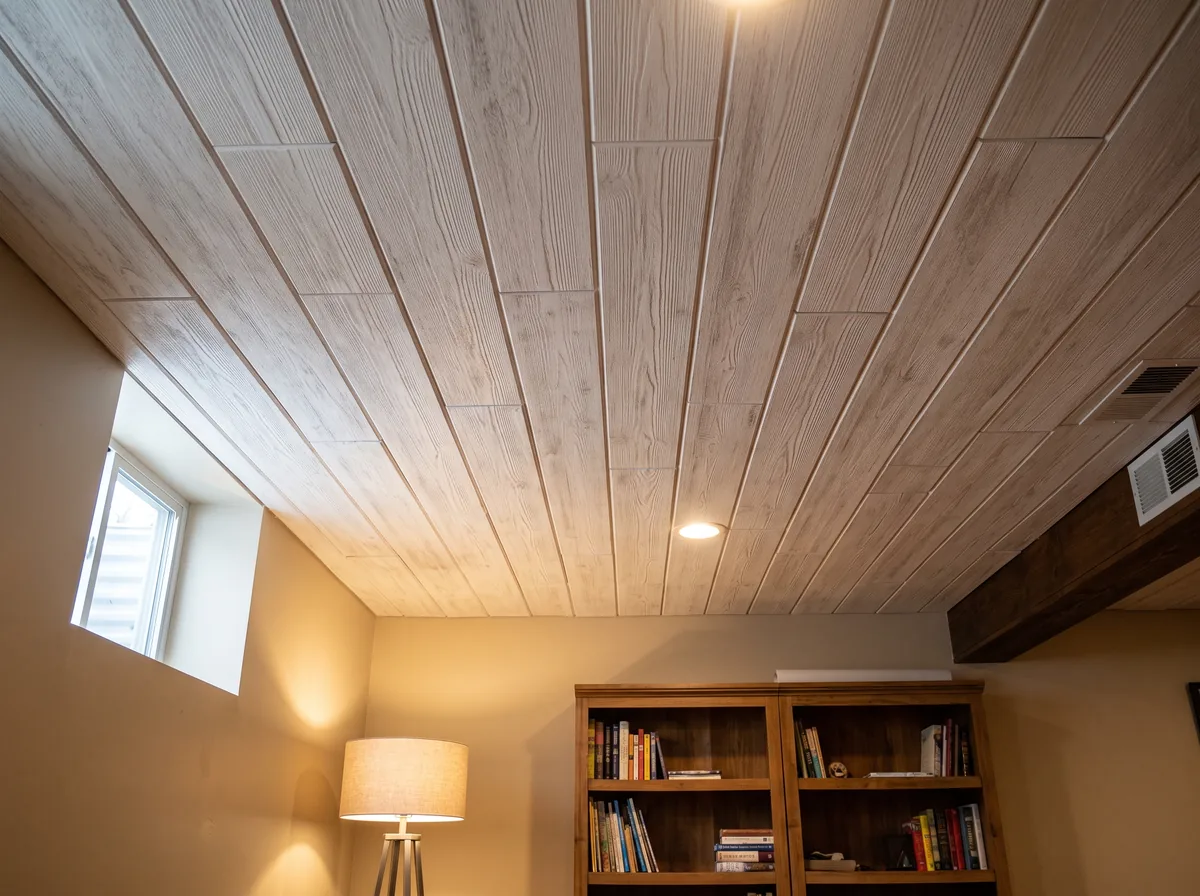
Choosing ceiling planks for a humid basement
The good news is that choosing ceiling planks for a humid basement usually comes down to a short list of questions about how the room looks and how it gets used, not a complicated spec sheet:
- Is there an active leak, standing water, or a recurring water problem? Stop here. Any ceiling finish goes up only after the water source itself has been fixed, never before.
- Do you want the texture of a wood-look plank? Foam ceiling planks come in wood-look, whitewash, and concrete-look finishes and install the same way as a glue-up ceiling tile, without the moisture sensitivity of a real wood plank.
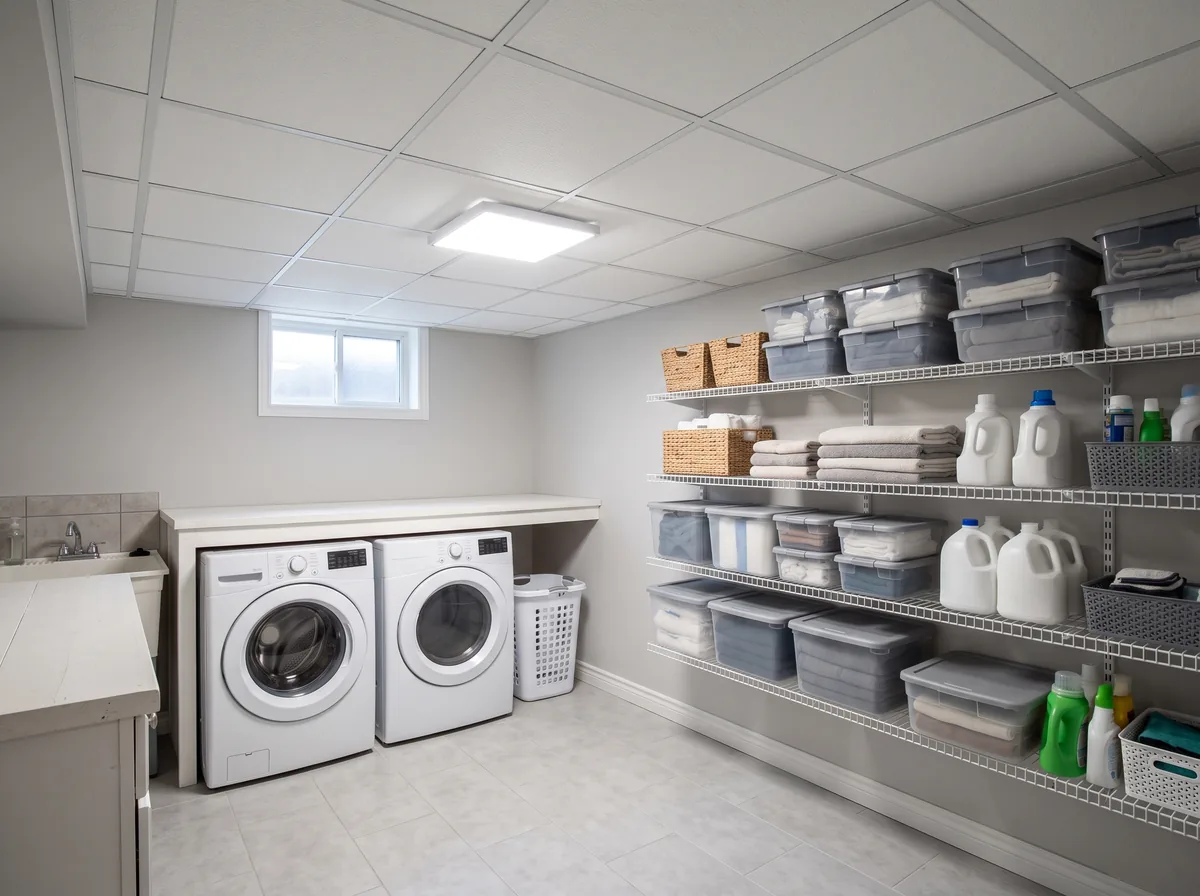
- Do you need a fully washable surface, for a laundry room, a bathroom-adjacent space, or a basement rental unit? PVC ceiling tiles are the vinyl option in the literal sense and suit rooms that see regular cleaning or occasional splashing.
- Will you ever need to reach pipes or wiring above the ceiling? A drop-in 2x2 or 2x4 PVC tile in a suspended grid comes back out by hand, while a glue-up tile or plank is a more permanent finish. Talissa Decor's installation guides for each product walk through both methods step by step.
- Working with a tight budget or a weekend timeline? Glue-up tiles and planks need only adhesive and a level chalk line, while a drop-in grid ceiling takes longer to frame but hides more above the finished surface.
Here is what ceiling planks for a humid basement actually look like installed, next to a PVC tile ceiling in a similar room.
Did you know
PVC ceiling tiles and foam ceiling planks are typically installed directly over furring strips or an existing flat ceiling, the same substrate prep used for drywall, so a basement that was already framed for drywall does not usually need to be reframed for either product.
PVC ceiling tiles vs foam ceiling planks, side by side
The table below lines up PVC ceiling tiles against foam ceiling planks for a humid basement, feature by feature.
| Feature | PVC ceiling tiles (vinyl) | Foam ceiling planks |
|---|---|---|
| Material | Rigid PVC | Expanded polystyrene foam |
| Common basement use | Laundry rooms, bathrooms-adjacent spaces, rental basement suites | Rec rooms and living spaces wanting a wood-look ceiling |
| Install style | Drop-in 2x2 or 2x4 grid, or glue-up | Glue-up only |
| Finish options | Solid colors, patterns, faux metallic finishes | Wood-look, whitewash, concrete-look finishes |
| Everyday cleaning | Wipes down with a damp cloth | Wipes down with a damp cloth, gently |
Neither column is the automatic winner. A rental basement suite that needs to survive tenant turnover leans PVC; a family room built around a warm, cabin-like feel leans foam plank. Plenty of basements end up using both, PVC tiles in the laundry or mechanical area and planks everywhere else.
Installation basics that matter more in a basement
A basement ceiling is usually flatter and lower than the ceiling upstairs, so a few habits carry more weight down there than they do in a main-floor room. Because ceiling planks for a humid basement usually go up with adhesive on furring strips, instead of drywall screws and tape, substrate prep matters as much as the product itself. Glue-up tiles and planks need an adhesive the tile manufacturer recommends for that surface; Talissa Decor's own Styro Pro adhesive is formulated for its foam and styrofoam products specifically, and using it, or an equivalent the manufacturer names, matters more on a substrate that can see occasional humidity swings.
At the walls, an edge filler or border trim piece gives the perimeter a finished edge and covers the small gap that is common where a basement ceiling meets a wall that is not perfectly square. Working room by room, rather than trying to tile the whole basement in one long session, also makes it easier to catch a crooked row before it runs the length of the room.
Pro tip
Before you commit to a whole room, order a physical sample kit. A sample shows the finish and the color under your own basement lighting, which reads very differently than a product photo taken under studio lights.
When to stop and call a professional first
None of this is a reason to ignore a real moisture problem. Water stains on the ceiling, drywall that has gone soft or visibly sagging, an active leak, or a musty smell that does not clear up with normal ventilation are signs of an underlying problem that a new ceiling finish will only cover up, not solve. If you already suspect mold, CMHC's guidance on mould in housing points toward addressing the moisture source first and, for anything beyond a small surface patch, bringing in a qualified remediation professional rather than covering it over. None of this changes the basic rule for ceiling planks for a humid basement: fix the water problem first, then pick the material.

Good to know
This guide is general information about ceiling planks for a humid basement, not a moisture diagnosis for your property. PVC and foam do not absorb water the way drywall or wood does, but neither product stops a leak or fixes a humidity problem at its source. If you have an active leak, sagging or water-stained drywall, or suspect mold, address that with a qualified professional before installing any new ceiling finish. Talissa Decor is not responsible for a ceiling material installed over an unresolved moisture problem.
Download the free quick guide
A one-page checklist for choosing between PVC ceiling tiles and foam ceiling planks in a humid basement, plus what to check before you install.
Frequently asked questions
Does Talissa Decor actually sell vinyl ceiling planks?
Not literally. Talissa's PVC ceiling tiles are vinyl in the material sense, since PVC is short for polyvinyl chloride, but the plank line is a separate product made from expanded polystyrene foam in wood-look, whitewash, and concrete-look finishes. Anyone comparing ceiling planks for a humid basement online will usually run into that same mix-up, since 'vinyl plank' is a familiar term from flooring that does not map onto a single ceiling product.
Will a foam or PVC ceiling stop moisture from coming through a basement ceiling?
No. Both materials handle humidity better than drywall or painted wood trim because they do not absorb moisture the same way, but neither one is a moisture barrier or a fix for a leak, a cracked foundation, or a basement that runs damp all year. Those are jobs for a dehumidifier, a working sump pump, and addressing the source of the water, with the ceiling finish going up only once that work is done.
Can PVC tiles or foam planks go directly over an existing basement ceiling?
Often, yes, over furring strips or a flat, sound surface, using an adhesive the manufacturer recommends for that substrate. A ceiling with active water damage, soft or sagging drywall, or suspected mold needs to be assessed and fixed first, since gluing a new finish over a damaged one only hides the problem rather than solving it.
None of this replaces fixing an actual water problem. If the basement has an active leak, sagging or stained drywall, or a musty smell that will not clear, deal with that first. A ceiling finish sits on top of the problem, it does not solve it.
Once the room itself is dry and ready, the choice between ceiling planks for a humid basement and a PVC tile ceiling mostly comes down to look and cleaning needs. Talissa Decor's installation guides, the PVC tile FAQ, and sample kits cover the details from there, and talk to the Talissa Decor team if you want a second opinion before ordering enough material for the whole room.