 Largest Ceiling
  CALL :
  About us
 FAQs
FAQs Gallery
 Contact


 Ceiling Planks
 2×2 PVC Ceiling Tiles
 Styrofoam Ceiling Tiles
 Wall Mural
 3D Wall Panels
 Crown Moldings
 Faux Wood Beams
 Other Products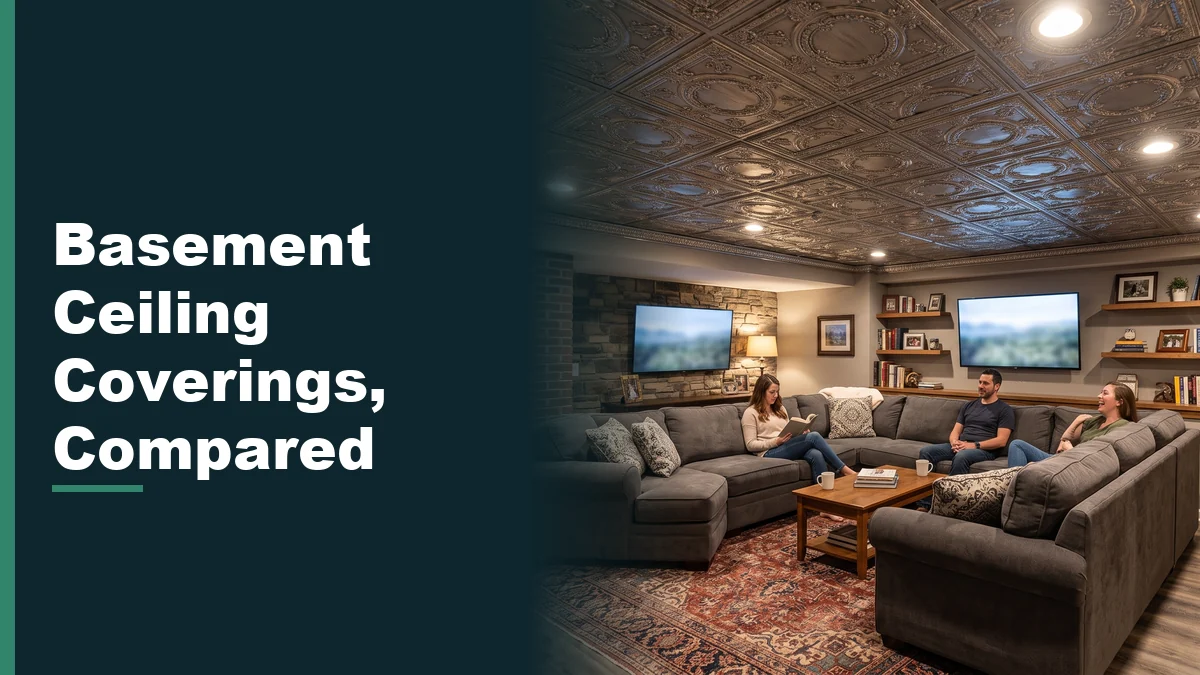
Exploring Alternative Ceiling Coverings for Low Basement Ceilings
Here is the short version. If your basement ceiling has little clearance to spare, a tile that glues or nails straight to the surface is almost always the better basement ceiling covering. A suspended grid earns its keep only when you genuinely need to open the ceiling again later. We walked that trade-off through on a basement ceiling project we documented, and the pattern holds for most low-ceiling basements: the covering that costs the least height is rarely the one that gives you the most flexibility.
This guide compares the basement ceiling coverings people actually choose between: tiles that glue or nail to the surface, a suspended grid system, and two options Talissa Decor does not sell but deserves an honest mention, painted exposed joists and drywall. None of them is right for every basement.
What already eats into your basement ceiling height
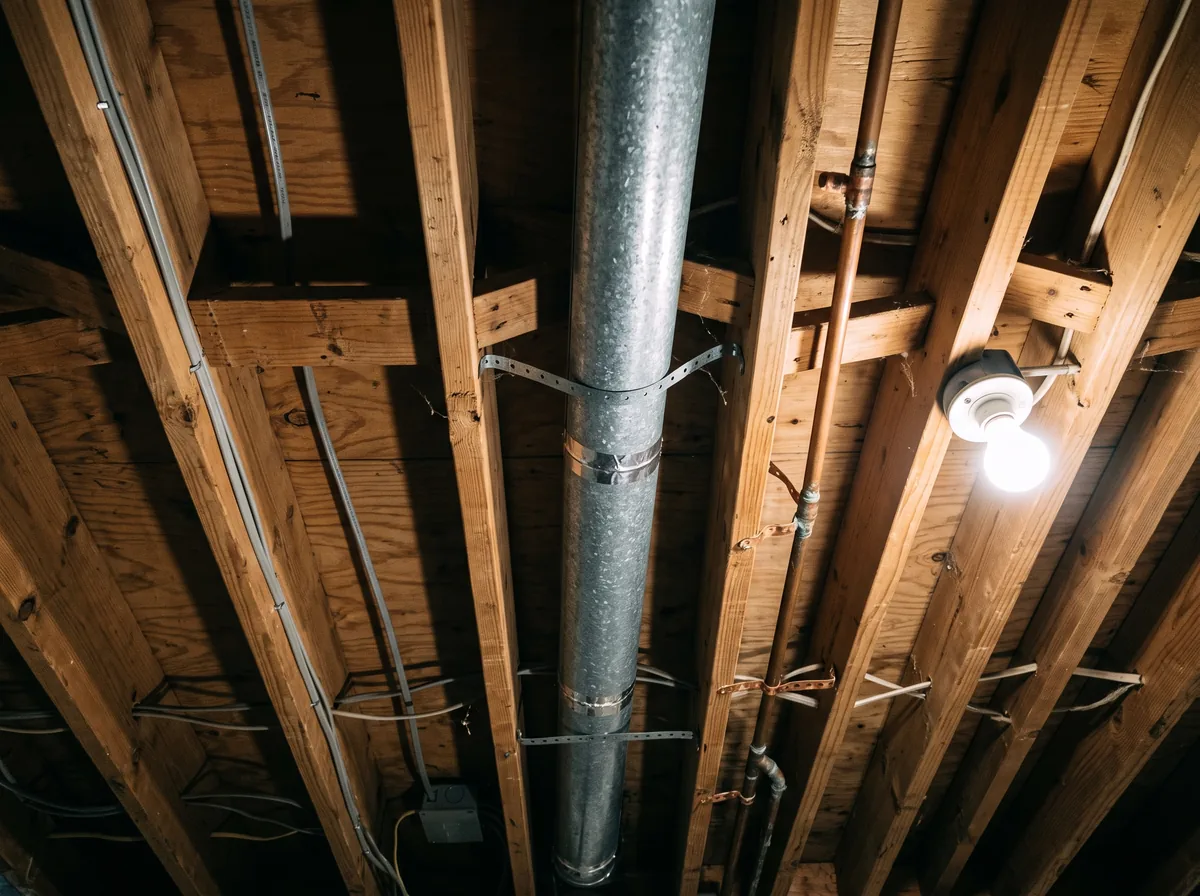
By the time ductwork, drain lines, electrical runs and the odd structural beam are accounted for, plenty of basements are already working with less headroom than the floor above, before any ceiling covering goes up at all. That is the constraint every other decision in this guide sits on top of.
That is why the choice between basement ceiling coverings matters more down here than almost anywhere else in the house. A quarter inch you would never notice upstairs is the difference between a comfortable rec room and one where a tall guest ducks every time he walks through.
Quick take
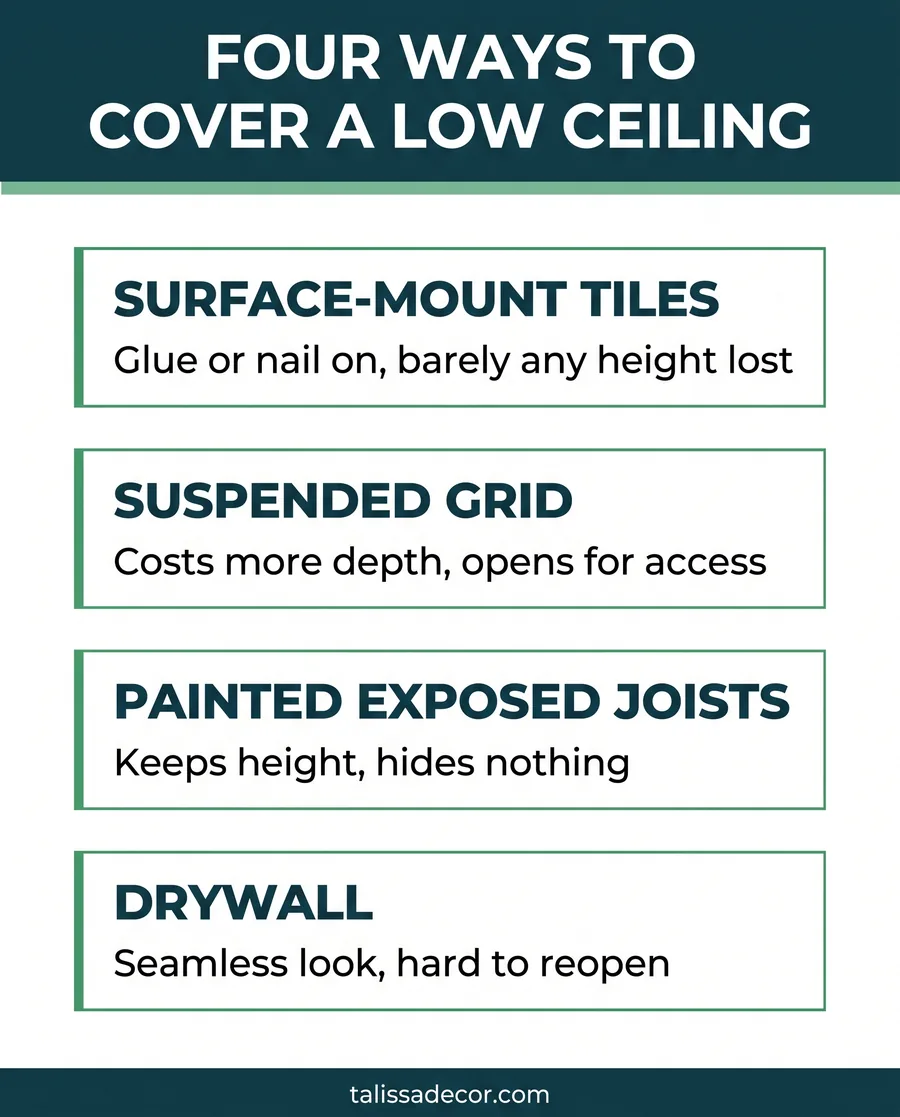
The lowest-cost option in headroom is a tile glued or nailed straight to the surface. The highest-cost option is a suspended grid. Everything else in this guide is really about which of those two trade-offs, plus the two options we do not sell, fits how you use the room.
The basement ceiling coverings on the table, compared honestly
Four paths show up in almost every low-ceiling basement conversation. Two of them are ours. Two of them are not, and we think an honest comparison should include them anyway.
Surface-mount tiles: glue or nail straight to the ceiling
Faux tin, PVC and styrofoam tiles can be glued or nailed directly to a flat ceiling, or to furring strips run across exposed joists. Because there is no grid and no framework underneath, this basement ceiling covering adds close to nothing beyond the thickness of the tile itself. It also finishes the look and hides the joists in the same step, which is why it is the option we hear about most from basement projects specifically.
The trade-off is permanence. A glued or nailed tile is not built to be lifted out and put back the way a grid tile is, so plan the glue-up installation walkthrough with any access points you will want in mind before the adhesive goes on.
A suspended grid: the classic drop ceiling
A metal grid hangs on wires or clips below the joists, and PVC lay-in tiles rest inside it. This basement ceiling covering commonly costs several inches once the grid, the hangers and the tile itself are stacked together below the framing, which is real headroom in a basement that did not have much to spare. In exchange, any single tile lifts out in seconds, so a shutoff valve or a junction box stays reachable for years, not just for the day the ceiling goes in.
Painted exposed joists, not something we sell, worth knowing anyway
Painting the joists, ductwork and wiring a single dark color preserves nearly all your headroom, since nothing gets added below the framing. Done tidily it reads as an intentional industrial look, not an unfinished one. The honest downside: nothing is hidden, and a room finished this way tends to sound livelier, since there is less overhead surface to soften it.
Drywall, also not our product, still a fair comparison
Drywall gives the most seamless, house-like finish here, and it is the default plenty of basements land on. The catch is afterward: reaching a pipe or rewiring a light means cutting the board open and patching it again, a real project, not a five-minute fix. It suits basements with little planned mechanical work overhead.
| Covering | Headroom cost | Access to pipes and wiring | Best fit |
|---|---|---|---|
| Surface-mount tiles, glue or nail-up | Close to none, just the tile thickness | Limited, tiles are not built to be lifted repeatedly | Basements where every inch of height matters |
| Suspended grid with lay-in tiles | Noticeable, the grid and tile stack up | Excellent, any tile lifts out in seconds | Basements with ductwork or plumbing you expect to revisit |
| Painted exposed joists | Minimal, nothing is added below the framing | Total, nothing is ever covered | A deliberately industrial look, not a finished-room look |
| Drywall ceiling | Moderate, furring and board add some depth | Poor, access means cutting and patching | A permanently finished look with little planned mechanical work |
Why access to pipes and wiring matters as much as the height
It is easy to pick a basement ceiling covering based on how the room looks the day it is finished and forget that basements are where the plumbing, the electrical panel feed and half the ductwork in the house tend to run. Whatever sits above your ceiling now is not guaranteed to stay quiet for the next twenty years.
People often ask
Should I just build in an access panel? If you already know there is a valve, a cleanout or a junction box you will need again, plan a small hinged panel or a section of our drop-in tile system right over it, even if the rest of the room is glued tile or drywall. One planned opening beats an unplanned hole in a finished ceiling.

Moisture, sound and code questions worth asking first
Three questions come up on almost every basement job before anyone picks a finish. None of them have a single answer that applies to every house, so treat what follows as a starting point for a conversation, not a verdict.
Sound tends to be livelier under a hard, flat covering like tile or drywall than under an acoustic drop-ceiling tile built to absorb it, worth weighing if a home theater or a bedroom sits directly above. Moisture is separate, and no covering solves it. A damp basement needs the water addressed at the source, grading, a sump or better ventilation, before you commit to any finish. the EPA’s guidance on moisture and mold is a solid, general starting point for understanding indoor moisture.
Ceiling height minimums and fire-rating requirements for finished basements vary by municipality and by room use, and they are not something to guess at from a blog post. Before you commit to a suspended grid, a glued tile or anything permanent, a call to your municipal building department settles exactly what applies to your address, and it is a far cheaper conversation to have before installation than after.
Good to know
This article is general information to help you compare basement ceiling coverings, not a substitute for a site visit or a building department review. Ceiling height and fire-rating requirements vary by location and by how the space is used, and moisture problems need their own diagnosis. Confirm what applies to your basement before you install anything permanent.
Matching the covering to how you will use the room
A home theater or rec room with little above it beyond joists and insulation is the easiest call: a glued or nailed surface-mount tile keeps every inch of the low ceiling and looks finished the day it goes up. A laundry area, a home bar under an upstairs bathroom, or any space with active plumbing overhead leans the other way, toward a suspended grid, because the removable access gets used sooner than you expect. Still unsure? A suspended grid over the section nearest the mechanicals and a glued finish everywhere else is a reasonable split, not a compromise.
Download the free quick guide
A printable side-by-side of surface-mount tiles, suspended grids, exposed joists and drywall, plus the questions worth asking before you commit to a basement ceiling covering.
Frequently asked questions
Is there a minimum ceiling height a finished basement needs to meet?
Requirements vary by municipality and by how the room is used, including whether the space is finished as a bedroom or left as a rec room. Rather than repeat a number that might not apply to your address, call your municipal building department before you commit to any basement ceiling coverings, especially a suspended grid that adds real depth below the joists. That one phone call is faster than removing a finished ceiling that turns out not to meet what your local code requires.
Do surface-mount tiles or a suspended grid cost more headroom?
A suspended grid almost always costs more. The metal channels, the wires or clips holding them up, and the lay-in tile itself all stack together below the joists, adding noticeably more depth than a tile that glues or nails straight to the surface. Surface-mount basement ceiling coverings are the better fit when every inch of standing room matters. In return, a glued tile is not built to be lifted out and reset the way a grid tile is.
Can I still reach my pipes and wiring if I glue tiles to the ceiling?
Not easily, and that is the real trade-off to weigh. A suspended grid lets any single tile lift out in seconds, so a shutoff valve or a junction box stays reachable for years. A glued or nailed surface stays put, which looks cleaner but means cutting into it if something above needs attention later. If you already know there is a valve or panel you will need again, plan a small access point before the rest of the basement ceiling coverings go up.
Are basement ceiling coverings from Talissa Decor moisture resistant?
Some of our materials, including PVC, are described in our own product information as suited to humid spaces, but no ceiling covering solves a moisture problem by itself. A basement that stays damp needs the water addressed at the source, better grading, a working sump, or more ventilation, before you decide which basement ceiling coverings go up. Check the product page for the material you are considering, and treat the covering as the finish, not the fix, for damp air.
Which basement ceiling coverings work best for a home theater or rec room?
It depends on what sits above the room. If there is little you would ever need to reach again, a glued surface-mount tile keeps every inch of the low ceiling and looks finished immediately, which suits a home theater where light control and a tidy overhead surface both matter. If a bathroom, a kitchen or shared plumbing sits above the space, the removable access of a suspended grid is usually worth the extra height it costs. Walk the room with both trade-offs in mind before you decide.
The fastest way to settle this is to stop comparing photos and start comparing dimensions. Measure your actual clearance, find out what sits above the room, and check the one number a building department can give you in a single phone call. Once those three things are on paper, the choice between basement ceiling coverings tends to make itself.
If you want to see how a specific finish looks against your own basement lighting before you order, ask our team about ceiling tile samples and we will point you to the ones worth holding up to your ceiling first.