 Largest Ceiling
  CALL :
  About us
 FAQs
FAQs Gallery
 Contact


 Ceiling Planks
 2×2 PVC Ceiling Tiles
 Styrofoam Ceiling Tiles
 Wall Mural
 3D Wall Panels
 Crown Moldings
 Faux Wood Beams
 Other Products
Can You Install Foam Ceiling Panels over Damaged Drywall?
You have got a patch of cracked, patched, or water-stained drywall on the ceiling, and foam ceiling panels feel like the fastest way to make it disappear. The real question is not whether foam ceiling panels look good over damaged drywall. It is whether the damage underneath is the kind a decorative panel is allowed to hide, or the kind that keeps getting worse under a nice finish. Get that call wrong and you have glued a good-looking ceiling on top of a problem that is still active, which is exactly the trap our own common glue-up tile mistakes roundup keeps coming back to.
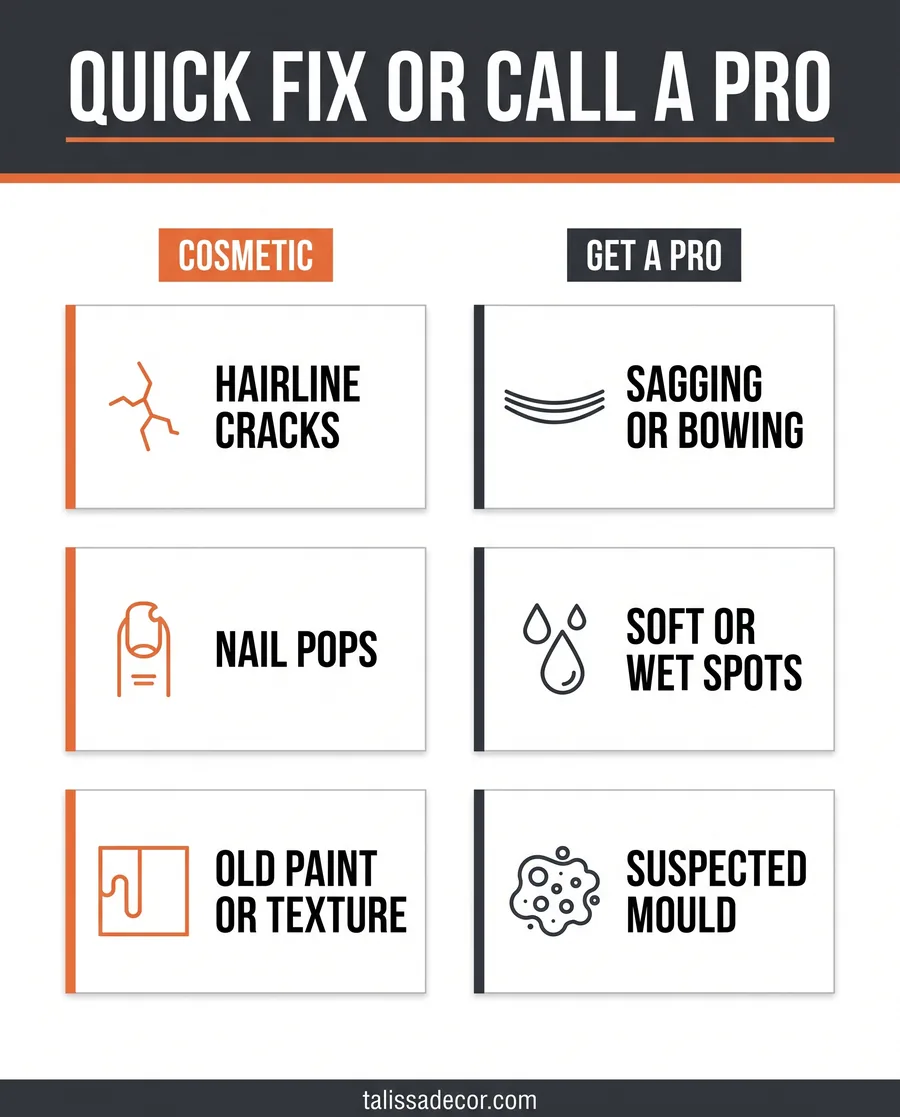
This is a quick-fix-versus-professional-look decision, and it genuinely goes both ways. Hairline cracks, nail pops, old paint, and cosmetic texture are the kind of damage a glue-up ceiling handles well. Sagging, soft spots, active leaks, and anything that smells or looks like mould are a different category entirely, and no amount of foam panel coverage changes that.
The real question: foam ceiling panels over damaged drywall
Talissa Decor’s foam ceiling panels are glue-up expanded polystyrene tiles, a thin decorative layer that bonds directly to whatever is behind it. That means the panel is only ever as steady as the surface underneath, and it will follow the shape of that surface, not correct it. Before deciding whether foam ceiling panels over damaged drywall is a weekend project or a call to a professional, sort the damage into one of two buckets: cosmetic, or structural and moisture-related. Everything below hangs off that one split.
Quick take
Gluing foam ceiling panels over cosmetically damaged drywall, think hairline cracks, nail pops, old paint, is generally a reasonable cover-up once the surface is clean, flat, and sound. Gluing panels over sagging, soft, or actively wet drywall is not a fix at all, it is a finish sitting on top of a problem that is still getting worse.
Cosmetic damage a cover-up can handle
Some drywall damage is purely surface-level, and installing foam ceiling panels over that kind of damaged drywall is a common, practical way to skip a repaint and a texture match. The list usually includes:
- Hairline cracks along a seam or in a corner that have not changed in size or spread over time.
- Nail or screw pops, small raised bumps where a fastener has worked loose from the framing behind the board.
- Old paint in a colour or sheen you do not want to match, including yellowed or peeling top coats over otherwise solid drywall.
- Uneven or old texture, popcorn, stipple, or a patch job that never quite blended in.
- Minor dents, scuffs, or small holes from removed fixtures that have already been patched and sanded flat.
In every one of those cases, the drywall itself is doing its job structurally. The damage is cosmetic, not a sign the board is failing, which is exactly the distinction that makes a glue-up panel a sensible cover-up rather than a bandage on a bigger problem.
Damage that needs a professional look first
Other kinds of damage are a signal that something behind the drywall needs attention before anything gets glued to the front of it. Covering foam ceiling panels over damaged drywall in these situations does not solve the underlying issue, it just hides where to look for it:
- Sagging or bowing anywhere in the ceiling, which points to a moisture, fastening, or structural issue behind the board.
- Soft or spongy spots when you press on the drywall, a sign the paper facing or the gypsum core has broken down.
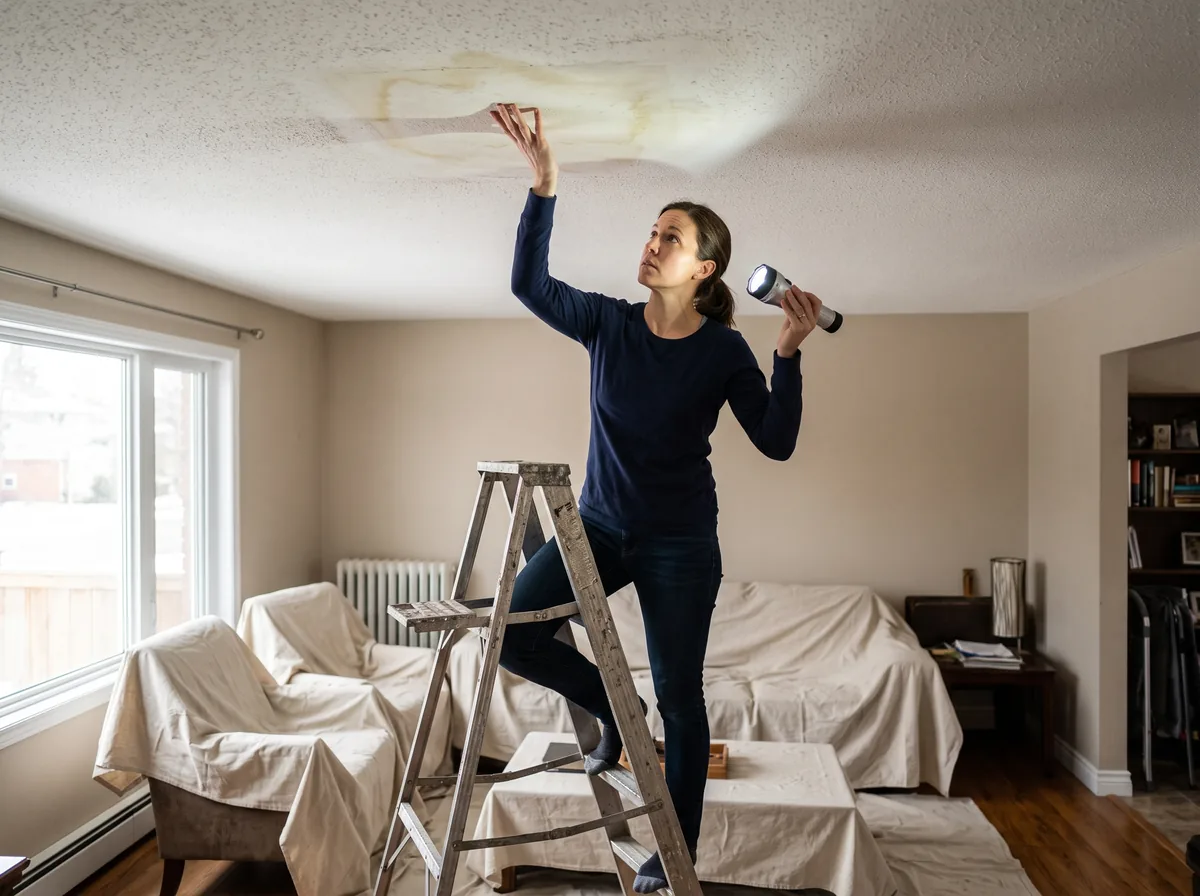
- Active leaks, fresh water stains, or a musty smell, all of which mean the source of moisture has not been dealt with yet.
- Visible mould or a suspected mould smell, which calls for a qualified remediation professional rather than a cover-up of any kind.
- Cracks that are widening, new, or paired with a door or window that has started sticking, which can point to movement in the structure rather than an old cosmetic crack.
Red flag
Sagging drywall, soft or spongy spots, an active leak, or suspected mould are stop conditions. Fix the source first and have the area properly inspected before gluing foam ceiling panels over damaged drywall like this. The EPA’s guidance on mold and moisture in the home is a useful starting point, and a qualified remediation professional is the right call for anything beyond a small, dry, cosmetic patch.
What foam ceiling panels need from the surface
A glue-up foam panel needs a surface that is clean, dry, flat, and free of loose or flaking material, since the adhesive bonds to whatever it touches. Dust, grease, peeling paint, or loose old texture all reduce how well an adhesive can grip, regardless of how good the panel itself is. That is also why the surface should be checked with an adhesive the tile manufacturer recommends for that substrate, not whatever adhesive is left over from another project. Talissa Decor lists a foam-specific tile adhesive built for exactly this kind of glue-up, and following its own instructions matters more than the brand you choose.
It is also worth a look at the full ceiling tile FAQ if this is your first glue-up project, since panel weight, layout, and cutting questions come up on almost every installation regardless of what condition the drywall is in.
Prepping damaged drywall before you glue up panels
Once you have confirmed the damage is cosmetic, a short prep sequence makes the difference between panels that stay put and panels that lift at the edges months later:
- Clean the ceiling with a dry brush or vacuum attachment to remove dust, cobwebs, and any loose debris.
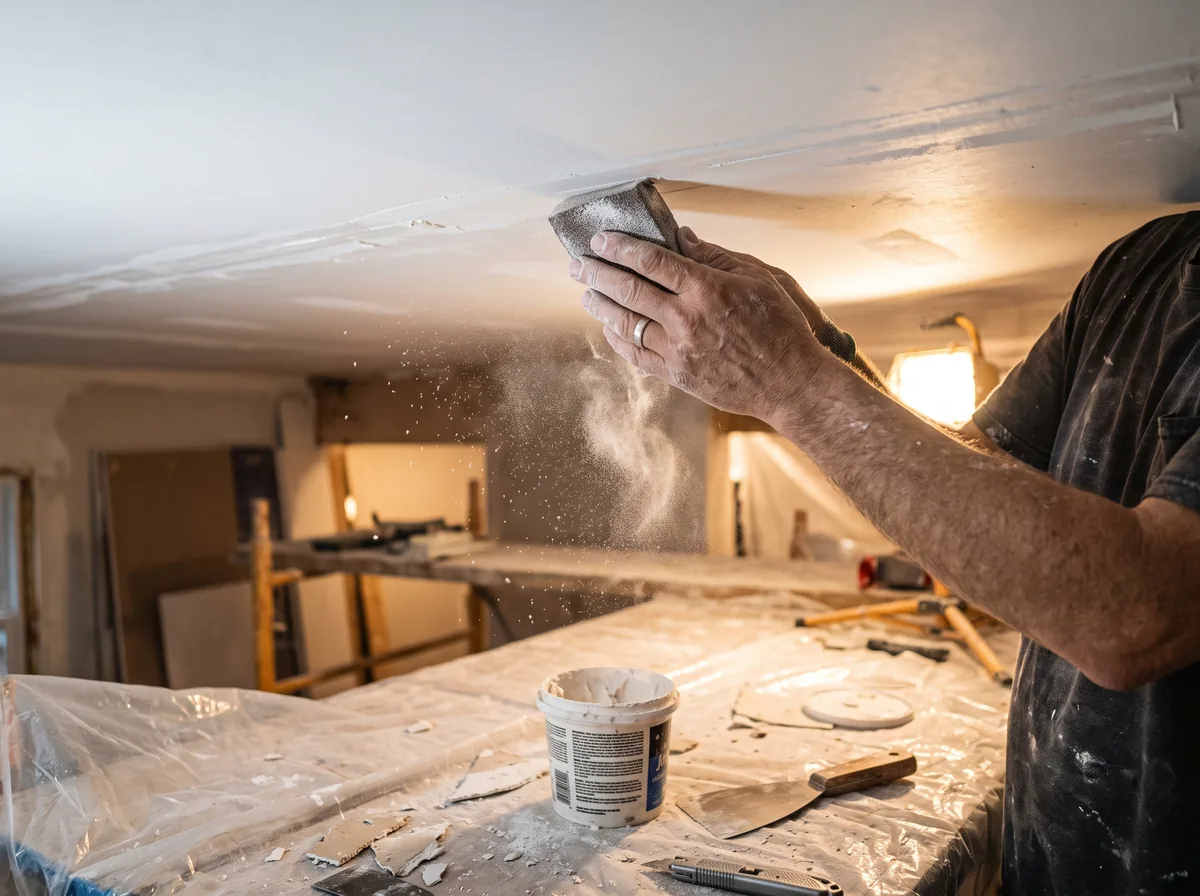
- Sand down raised nail pops, ridges, or old texture until the surface feels flat under your hand, not just level to the eye.
- Fill any small holes or gouges with a standard drywall compound and let it cure fully before sanding it smooth.
- Prime any bare, sanded, or freshly patched areas so the surface absorbs adhesive evenly across the whole panel.
- Dry-fit your layout and mark reference lines before any adhesive goes on, so the pattern lines up over the repaired areas instead of drawing the eye to them.
Our own styrofoam tile installation guide walks through the full layout and adhesive process step by step, and it is worth reading alongside this prep list before gluing panels over damaged drywall that has not been cleaned and sanded yet.
What a foam panel cover-up will not fix
A cover-up is a finish, not a repair. Gluing foam ceiling panels over damaged drywall will not stop a slow leak, will not strengthen a sagging section, and will not make a moisture problem go away, it will only make it harder to see until it reappears somewhere else. Expanded polystyrene and PVC tiles do not absorb moisture the way drywall or wood does, but nothing about the panel itself stops water from finding a new path if the source behind the wall is never addressed.
For an old seam or a wall-to-ceiling junction that still shows a line after patching, an edge filler or border trim can dress up the transition without pretending the seam was never there. For rental units, offices, salons, or other small businesses weighing the same decision, the considerations for commercial ceiling tile applications are the same substrate rules on a larger scale, not a different set of standards.
Good to know
This article is general guidance, not an inspection of your ceiling. Drywall damage can look cosmetic on the surface while hiding a moisture or structural issue behind it, so if you are at all unsure which category your damage falls into, have it looked at by a qualified professional before covering it with any product, foam ceiling panels included.
Download the free quick guide
A one-page checklist for sorting cosmetic ceiling damage from damage that needs a professional look first.
Frequently asked questions
Can I install foam ceiling panels over damaged drywall myself?
For cosmetic damage, hairline cracks, nail pops, old paint, uneven texture, yes, once the surface is cleaned, sanded flat, and primed where you have patched it. For sagging, soft, wet, or mould-suspect drywall, get a professional look first, since a foam panel will not resolve whatever is causing that kind of damage.
Will a foam ceiling panel hide a water stain for good?
It will hide the stain from view, but it will not fix whatever caused it. If the leak that produced the stain has not been repaired, moisture can keep affecting the area behind the panel even though nothing shows on the surface. Confirm the source is fixed and the drywall is fully dry before covering a water-stained area with anything.
Do I need to remove old paint or texture before gluing up panels?
Loose, flaking, or peeling paint and texture should come off, since an adhesive needs a sound surface to grip. Old paint that is intact and well bonded to the drywall generally does not need to be stripped, but the area should still be cleaned and, if you have patched anything, primed before the panels go up.
Verdict: cosmetic damage, cracks, nail pops, old paint, uneven texture, once cleaned, sanded, and primed, is a reasonable case for foam ceiling panels over damaged drywall. Sagging, soft, wet, or mould-suspect drywall is not, and no glue-up product changes that answer. When the damage is not obviously one or the other, treat it as the serious case until a professional tells you otherwise.
Still not sure which bucket your ceiling falls into, or want a second opinion on the layout before you commit to adhesive? ask the Talissa Decor team and we will help you plan the install around what your ceiling actually needs.